As news reports warn about growing forest fires and threats to life, the looming climate disaster becomes a metaphor for strained familial relationships in this intimate one-woman show.
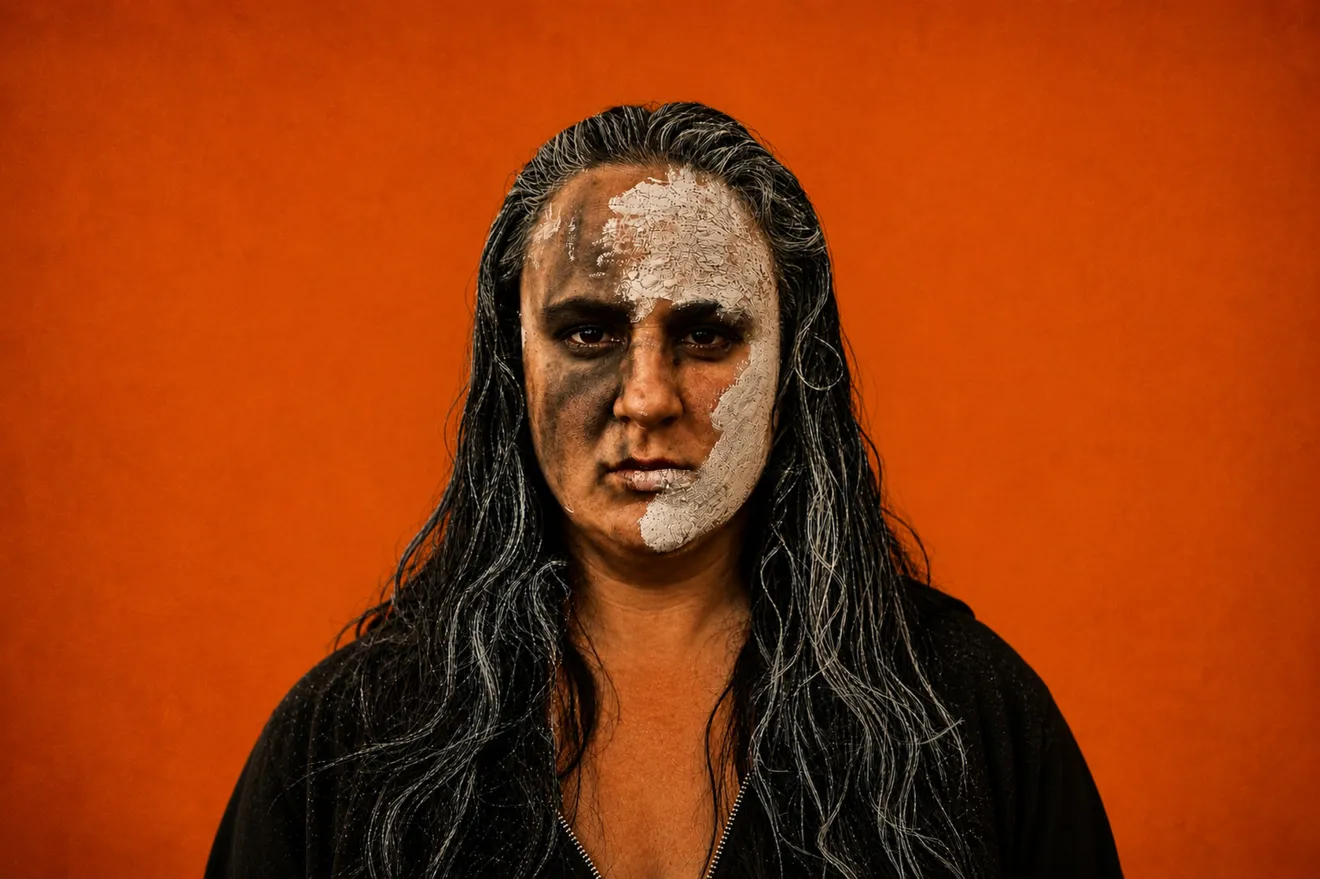
Written, directed, and performed by Crystalia Varelis, Controlled Burn is an intimate look at the difficult and complex relationships that can form between mother and daughter. Varelis uses webs of roots and cloth as neat points of comparison as each of the three women presented here reconciles with the strains of their connection with each other. The combination of familial ties with connections to the natural world is a neat touch too, tying family to ideas that are inescapable; we cannot choose our family, much like we cannot choose nature, but we can choose how we interact with them.
Controlled Burn is structured around three extended monologues, threaded together by neat, long transitions that allow the behaviours of each woman to be lingered on and reflected upon. Varelis begins as Niky, living with a forest fire drifting towards her in the distance and gently trying to untangle fabric in a thinly veiled yet appropriate establishment of the work’s comment on networks and interconnectivity. Niky is estranged from her mother and sister, in an act that has protected her against the control of the family’s domineering matriarch.
Interestingly, as the piece progresses, the sense of space feels smaller. We move from Niky to sister Elena, who still lives at home with mum Stavroula, tending to her ailing mother’s needs with a blend of fairness and frustration. Here, Varelis cuts a figure of quiet anguish, kneading clay in a manner that betrays her gentle tones. Elena slips into lyricism when ruminating on her oppressive situation, which can be a little disorienting, but there is terrific authenticity here in Varelis’s construct of a child struggling to emerge from the shadows of her parent even in adulthood.
The slow transitions between performing as the daughters and the mother are an interesting choice, hinting at the future for these women who will, or may, eventually mould into their mother, willingly or not. Stavroula is presented as abrasive and problematic by her daughters, but here Varelis’s construction of the matriarch is more textured, with her current behaviours impacted by a lingering sense of trauma, amid a heightened vulnerability as bottles of medication lie scattered around her.
The show’s title becomes the central metaphor for the piece, with all three women scorched by their relationship. Both daughters are, in their own way, trying to distance themselves from their difficult mother. The nature of it being a one-woman show does, sadly, rob us of a confrontation between these complex and rich characters, leaving the play feeling teasingly unresolved.
That said, the sense of destruction between the three women is palpable, yet amid the huge disasters that await the trio, there is a sense of intimacy that remains, serving as a deft reminder about control, family relationships, and the strains that both separate and bind us.
Controlled Burn ran at the Camden People’s Theatre, as part of Camden Fringe 2026, on 4 – 5 August 2026. This review is of a professionally filmed version of the play, provided by the company.