I sat down with director Ami Nagano to find out more about Rhino! coming to the Theatro Technis this November as part of Voila! Festival.
Can you tell me a little about your show and what audiences can expect?
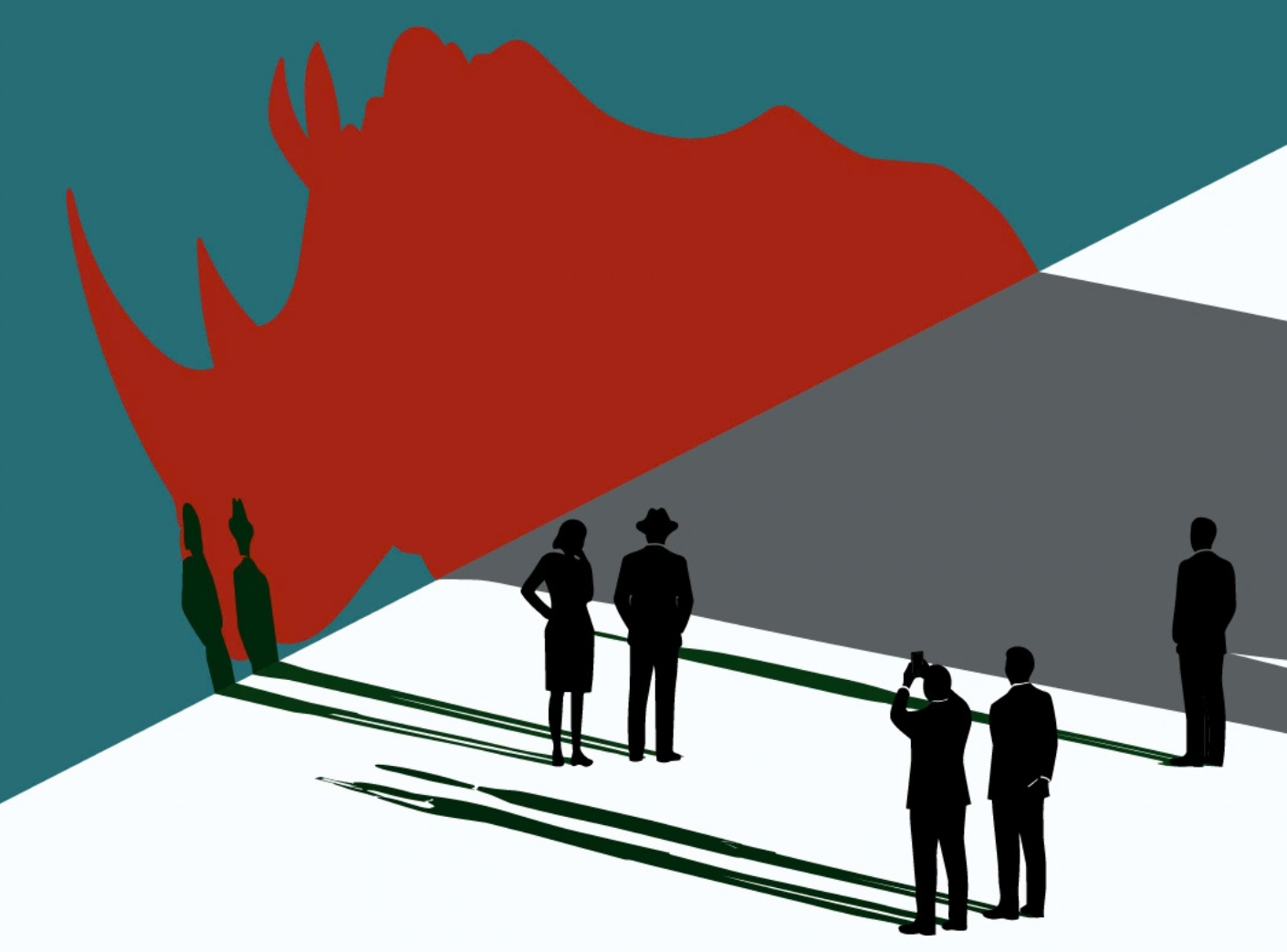
Rhino! is an original physical theatre production inspired by Eugène Ionesco’s Rhinoceros, exploring conformity, resistance and what it means to remain human in an increasingly polarised world.
The story unfolds in a rehearsal room, where a group of performers attempt to create a show together. But when they find themselves without a director, their personal fears, insecurities and inner conflicts begin to surface, gradually transforming the rehearsal into a dreamlike world where the boundaries between reality and imagination blur.
Blending Tanztheater, physical storytelling and spoken text, the show moves between humour, absurdity and moments of vulnerability.
We invite the audience to witness the beauty and difficulty of coexistence — and perhaps question what makes us human in the first place.
What drew you to this specific story?
Our starting point was a growing sense of anxiety about the world we live in — the influence of social media, the rapid development of AI, and how these forces are reshaping our relationships, identities and sense of reality.
We wanted to reconsider what it means to be human in this changing world. Tanztheater became an essential part of this exploration, allowing us to reveal human emotions, contradictions and relationships through the body, beyond what words alone can express.
As we brought together different artistic approaches, we arrived at a play-within-a-play structure, where we could explore the contradictions between our desire to remain individuals and our longing to belong to something larger than ourselves. What does freedom really mean under the pressures of society? And can the conflicts we carry within ourselves ever truly be resolved on our own?
Taking Eugène Ionesco’s Rhinoceros as our starting point helped bring these elements together. Its questions about conformity and resistance gave us a dramaturgical framework to examine contemporary anxieties, while creating an entirely original piece rather than adapting the play itself.
Ultimately, we wanted to explore not only how we resist losing our humanity, but also how we might coexist with all our differences and contradictions.
What has been the biggest challenge in bringing this production to life?
The biggest challenge has been bringing together two very different dramaturgical approaches: theatre and Tanztheater.
As a theatre director, I work closely with storytelling and character development, while Adrian Look, our Tanztheater choreographer, explores fragmentation, allowing emotions, elements of human problem itself to exist beyond chronological order or logical cause and effect.
This contrast also extends to our performers, who come from diverse artistic training and cultural backgrounds, including actors and dancers, each bringing their own ways of understanding and expressing the world. Finding a way for these different approaches to coexist without compromising their individuality has been a fascinating challenge.
Interestingly, this creative tension reflects the central question of Rhino! itself: how can different perspectives coexist without losing their individuality? Rather than forcing everything into a single narrative, we’ve been exploring how these different theatrical languages and artistic voices can challenge and enrich one another.
How does the design of your show (set, sound, or lighting) impact the presentation of your story?
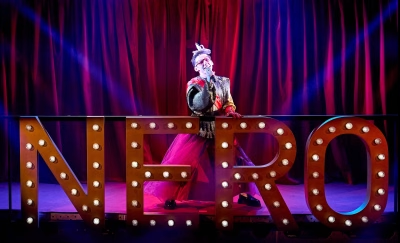
The element I would most like the audience to notice is the miniature theatre box.
We considered using smartphones and laptops to reflect our digital world, but realised that these familiar devices might limit the imagination and magic of theatre. Instead, the miniature box invites us to step outside our own world and look back at ourselves from a distance. It also plays a key role in the play-within-a-play structure.
The original music, composed by Lian Dyogi, was developed collaboratively with the performers throughout rehearsals. I believe this creative process itself embodies the idea of coexistence — different artistic voices coming together to create something none of us could have made alone.
If you could sum up the show in one word or phrase, what would it be and why?
“Resistance and Coexistence.”
Our creative process began with the question of how we can resist conformity and remain human in an increasingly polarised world.
But through the process of bringing together different artistic approaches, cultural backgrounds and individual perspectives, we began to question what resistance really means. Is remaining human about defending our individuality, or learning to live with contradictions, vulnerabilities and differences?
As the work developed, we found ourselves becoming increasingly interested in the possibilities of coexistence, beyond the idea of resistance alone. Instead of simply searching for the right answers, we want the audience to witness the beauty of coexistence.
Through the collaboration between theatre and Tanztheater, and between artists with different backgrounds and perspectives, we hope to make this coexistence visible on stage. In a way, the process of creating Rhino! has become an experiment in coexistence itself.
Rhino! runs at the Theatro Technis, London, on 20 – 21 November. Tickets available at https://www.voilafestival.co.uk/events/rhino/