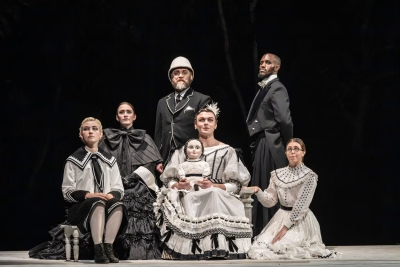
Cranford, a small, traditional, rural village on the outskirts of Victorian industrial Manchester, is ‘full of widows and old maids’. Yet amid the gossip and routines of the women who live in this childless, largely female town, there is a terrific sense of courage, survival, and companionship in this completely marvellous stage adaptation of Elizabeth Gaskell’s novel.
Largely, Lin Coghlan and Shaun McKenna’s script stays faithful to Gaskell’s story, sequencing some of the novel’s most iconic moments in an episodic structure that allows this new play to keep a strong momentum while also generating an inviting, finely drawn atmosphere. Cranford is a quiet, reserved village, maintained by a collection of stoic, albeit slightly mischievous, women, and is founded on strict religious beliefs and gender traditions.
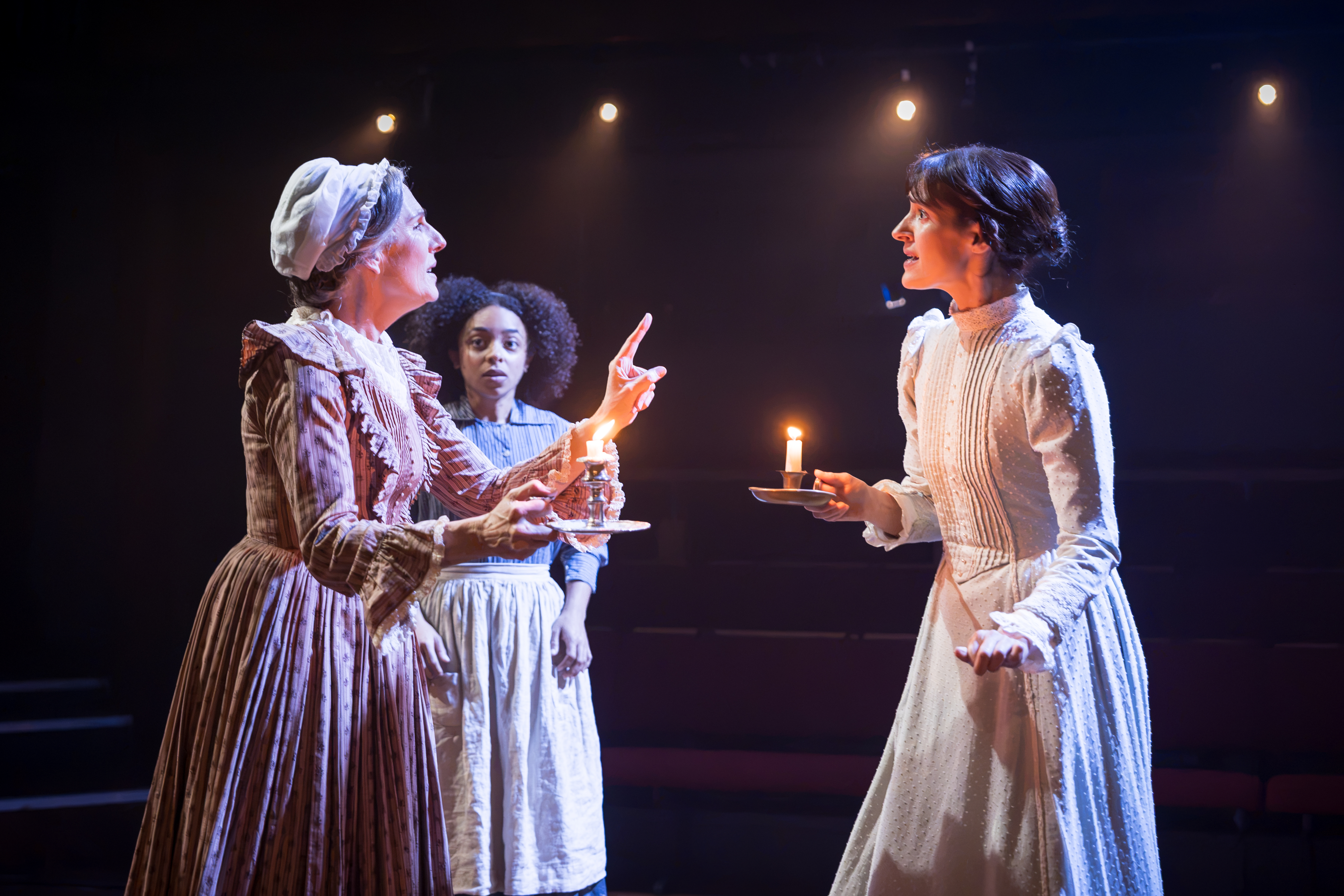
Like the novel, Cranford focuses upon the tremendously difficult and, at times, painful life of resident Matty Jenkyns (Tamsin Greig), who is reconciling with the events of her past and their stifling impact on her present. One significant change here, though, is that the novel’s narrator, Mary Smith, is cut and in comes new character Eliza Cleghorn (Phoebe Pryce), whose name is inspired by Gaskell’s own and who threads the production’s various episodes of the Cranford women’s lives together.
Condensing a novel into a two-hour play is an unenviable task, yet Coghlan and McKenna make smart choices here with the key moments selected. The play finds the right balance between humour and heart, ranging from the spirited exchange between the women and a travelling magician, through to the devastatingly tender moments of loss Matty experiences. The script is tightly formed and builds the story’s world effectively, with each character feeling vibrant and textured, combining deftly with Josh Roche’s direction, which is well suited to the theatre’s in-the-round configuration, immediately establishing a sense of intimacy as we are drawn into the lives of these strong and generous women. The result is an affecting, sharply observed piece of theatre, and one that is as moving as it is wickedly funny. Scenes such as rescuing a stranded cow are sequenced remarkably alongside poignant exchanges about love and grief, resulting in a cohesive piece that strikes the right balance between the trivial and the tender.
Greig’s Matty is utterly compelling. Wrestling with the implications of her strict religious upbringing, one that has left her adhering to expectation and duty rather than the adventures and desires longed for in her youth, Greig is outstanding in crafting a character whose outwardly contentedness disguises her desperate longing for something more. Greig’s wonderfully poised delivery captures the awkward humour of Matty’s character, such as her delightfully defiant use of French when a trip to Paris is proposed, contrasting sharply with her heartbreaking portrayal of Matty as life unwillingly changes around her. While Cranford is an impressive ensemble piece, Greig’s leading performance is unforgettable.
Around her, the women of Cranford are captured with buoyant vivacity and great humour. Amid the impending doom that seems to surround Matty, the script’s sharp humour is superbly crafted and delivered, evoking an authentically rich environment. Sara Crowe’s slightly meek but unintentionally witty Mrs Forester is a delight, while Alexandra Gilbreath’s portrayal of Miss Pole, loud, brash, and endlessly scheming, threatens to steal every scene. Pryce’s Eliza functions well, at first glance, as the play’s new form of narrator, weaving the episodes together and helping to guide the audience through the sensibilities and quirks of Cranford’s residents. Yet as the revelations regarding the motives for Eliza’s arrival become clear, the piece handles, amid the comedic chaos, this moment of tenderness with great care, resulting in an absorbingly moving performance from Pryce.
Meanwhile, Sara Powell’s stoic Mrs Jamieson is neatly formed, blending judgement with compassion, while Saffron Dey’s Martha, Matty’s maid, provides strong support for her mistress and represents a slightly more modern woman at odds with Matty’s conservative upbringing. Abigail Cruttenden’s doubling, as Matty’s fiercely genteel sister Deborah, evokes much of the play’s early humour, with the decision for Cruttenden then to play Lady Glenmire, who, like the rest of the women, becomes fiercely protective of Matty, an inspired choice. Cranford’s menfolk are secondary characters here, and while their impact still looms large, the production remains at its core a vividly told piece about women, by women.
While Cranford is not billed as a typically festive show, there is something comforting about this story at this time of year. Coghlan and McKenna have excavated the source material with great care, bringing Gaskell’s characters to life with an endless sense of kindness and compassion, which feels like an important reminder as the temperature drops.
Matty’s enduring sense of care and duty shines through, but it is the gentle and careful handling of the character’s experiences, and the magnificent combination of laughter and loss, that makes Cranford such a wonderful piece of theatre.