Greenwich Theatre will stage a new, ‘music-filled’, adaptation of William Shakespeare’s Romeo and Juliet in July, as part of the theatre’s long-term ambition to establish a recurring Shakespeare tradition in southeast London.
I spoke to James Haddrell, Artistic Director at the theatre, and who also directs this production, about the show and what audiences can expect.
What has drawn you to staging Romeo and Juliet at Greenwich Theatre?
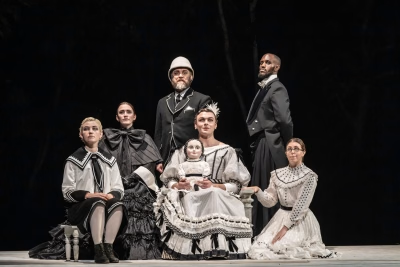
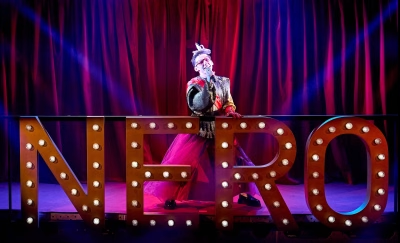
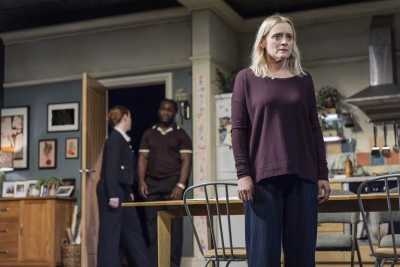
Over the past decade or so at Greenwich Theatre, we have worked to gradually reclaim our identity as one of London’s foremost producing theatres. As an unfunded venue, it has been a slow process, but by staging work by the likes of Mike Bartlett, Bryony Lavery, Caryl Churchill, Jez Butterworth, Joe Penhall and more, I think it’s working. However, when tackling work by some of the most notable playwrights working today, we haven’t picked their best-known or most recent work. We worked with Jez and with Joe on new adaptations of their work, we staged a piece by Caryl Churchill that had only been heard on the radio 50 years ago, we added circus and variety skits to a Mike Bartlett play – in each case, we’re trying to unearth something that people may not have connected with before. If we can do that with living playwrights, there’s no reason we shouldn’t start to broaden the approach and tackle Shakespeare.
The reason I was drawn to Romeo and Juliet is simply the quality of the storytelling and the authenticity of the emotion on show. I believe in staging work that connects an audience with a feeling or a set of feelings, that invites them to live through something with the characters on stage. In the case of R&J, for example, when Juliet’s family find that she is apparently dead, an audience shouldn’t sit smug in the knowledge that it’s a trick, they should feel what that apparent discovery does to a household and to the hearts of everyone who lives there. This is a heartbreaking story about two families who are so preoccupied with politics and public perception that they lose sight of their own children’s needs and desires, and in that sense, it’s as current now as it ever was.
The final reason for settling on this particular play must surely be linked to the fact that I’m a father bringing up daughters. We’ve changed Shakespeare’s original, though retaining the vast majority of the text unchanged, to reimagine it as a love story between two young women – because as my daughters get older, I can’t bear the thought that they’ll still live in a world where the so-called greatest love story ever told can still only be conceived of as a heterosexual one. I don’t know how they will identify or what life path they’ll follow, but to relentlessly hold up Shakespeare as the great philosopher and to endlessly repeat the notion that a heterosexual love story is the pinnacle of romantic experience just serves to reinforce a heteronormative culture and can’t possibly be right. It’s not as bad as it used to be – shows like ‘Sex Education’ and ‘Heartstopper’ are offering young people far more diverse positive role models in terms of sexuality – but Shakespeare is still held up as somehow superior, more important, less frivolous, more significant, timeless, and so the tropes that we gather from his work are granted greater authority, and that deserves to be challenged, not by cancelling or abandoning the work, but by claiming the work for a new time, allowing the emotional veracity of the writing to apply to a more openly diverse society.
How does shaping the tragedy as a queer love story change Shakespeare’s work, in your view?
Honestly, I think it changes it very little. This remains a story about lost children, about preoccupied parents, about the perils of losing sight of the huge potential for emotion that teenagers carry. However, the shift does arguably give an audience a more immediate entry point to understanding both Romeo’s and Juliet’s inability to find support and love from their parents. In both cases, falling in love like this, they should have run home and celebrated with their parents, but for whatever reason – in the original because of a family feud – they don’t feel they can. That idea of families dividing a city with their disagreement is alien to us now, I think, whereas the inability of young people to admit their queer identity, or even their lack of confidence in their identity, to heterosexual parents remains a challenge to so many.
The work is part of a new tradition at the theatre, aiming to produce regular Shakespeare productions. Why do you think Greenwich, and Greenwich Theatre, need an annual Shakespeare play?
I think Greenwich is synonymous with history and heritage, and Shakespeare is a huge part of our cultural heritage in this country, but I also think Greenwich Theatre is becoming stronger and stronger at rediscovering and revitalising work or interrogating writers that people think they know, and there couldn’t be a better example of that than Shakespeare.
What has been the biggest challenge in bringing this production to life?
I was determined that in making our particular switch in the way we present this play that we change as little as possible, but so much of the Shakespearean culture, humour and world view is gendered that it’s been hard to do. However, that doesn’t mean it’s impossible – and we have found a whole host of unexpected resonance in the text that justifies our choice. It’s important to remember that in the 1600s, particularly in the theatre where all the characters were played by male actors, gender was understood to have a performative quality. Juliet calls her new love “fair Romeo”, and fair often meant female, Romeo suggests that his newfound love has made him “effeminate”. The lines between genders were not as strict or fixed as we might expect.
The press release for the show promises a ‘music-filled’ production. Can you give us a clue as to what we might expect?
This is not an actor-musician show, as we understand that term, but most of our cast are musicians. That has offered me the chance to work with James Aldred, our fantastic musical director, to create a Verona with a musical heart. Music carries us along on the journey of the story; the party at which Romeo and Juliet meet is full of music, as is their wedding. The music is a mix of newly composed underscore and re-orchestrated songs that already exist, with a strong folk flavour. Folk music lends itself so strongly to storytelling that it seems to be the perfect fit.
If you could sum up the show in one word or phrase, what would it be and why?
There are obvious words to describe this story that focus on the final outcome – it’s timely and timeless, it’s heartbreaking, it’s a warning to distracted parents. However, Romeo and Juliet is often described as a comedy – until it isn’t. Until the first death, this is a romance in a difficult context that may be resolved by trickery or misdirection. In that section of the play, almost the whole first half, it’s a play about two young people with open hearts who fall in love, so in many ways I’d describe the show as joyful and uplifting. These two people should have lived long and rewarding lives, but at the cost of experiencing the most transformative love, and the play lets us share in their voyage of discovery
Romeo and Juliet plays at Greenwich Theatre 3-25 July, with tickets on sale here: https://greenwichtheatre.org.uk/events/romeo-juliet/