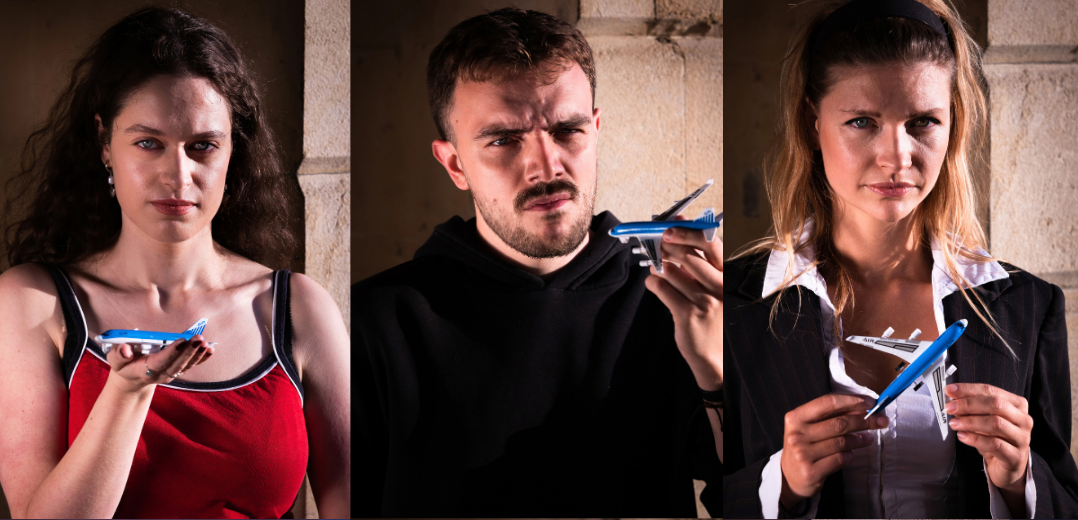
I sat down with director Karen Holley to learn more about BU21 coming to Lower Marsh Arts Club this October.
BU21 explores the aftermath of an unimaginable tragedy through six very different individuals. How do you balance the dark humour in Stuart Slade’s writing with the raw trauma these characters are experiencing?
The dark humour was very much what drew me to the play in the first place. It is a very British play, in its setting and its humour, there are a number of stiff upper lip moments, where we glimpse the pain of our story tellers through a veneer of bravado. The characters are all very human and flawed, as full of doubt and prejudice and hope.
What drew you to this specific play, and why feels important to explore its themes of survival and resilience on stage right now?
The dark humour caught my attention initially; I laughed out loud on first reading, which might seem strange given the subject matter. But that is how we survive. I think it’s a universal coping mechanism to laugh at oneself and the tragic situations you find yourselves in.
The world is a crazy place right now. What happens to these six characters is happening on some scale to people all over the world daily. Their entire lives are turned upside down by the actions of others, and yet they go on. They keep surviving. They work, they teach, they produce theatre.
Given the verbatim style and mock-documentary format, what has been the biggest challenge in making these fictional survivor testimonials feel authentic and deeply personal?
From the outset, these remarkable actors tapped into how it feels to become these characters and experience tragedy. We workshopped around the idea of who they were talking to at any given point. Is it the audience, or a therapist, or a journalist
Essentially whoever it was it was a relative stranger, not a friend, however when we tell your story to a stranger, we tend to hold back on the emotions we feel, we might talk about how we felt, but we often hold back on reliving the emotion, I guess as a defense mechanism. As a director, I was keen that we tried to keep to this storytelling mode. The writing helped enormously, there is a lot of self deprecation which helps to break the more emotional moments from falling into total despair.
How does the staging and sound design help build the sense of an intimate support group while conveying the scale of a major London disaster?
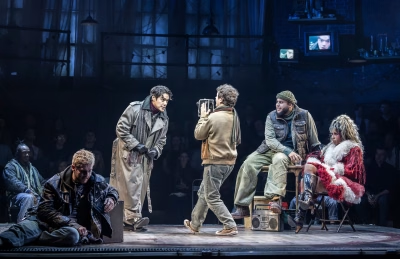
I wanted the piece to be set firmly in the performance space in the main instance, with the audience very much part of the action. Day one, I knew it would be 6 actors and 6 chairs.
We had in mind originally a fairly complex sound design; however, once we were in the performance space, it had so much atmosphere and its own soundscape of humming and buzzing, pretty much like a group therapy room in a hired hall somewhere in South London, that we decided to let the room be one of the characters, with a little atmosphere from lights and sound added in for dramatic effect.
If you could sum up the production in one word or phrase, what would it be and why?
Painfully hopeful. Life is full of tragedy and heartache, but we keep on going. The play says it better than I can.
BU21 runs at Lower Marsh Arts Club, London, on 21 – 25 October. Tickets available at https://www.tickettailor.com/events/vaultcreativearts/2293965