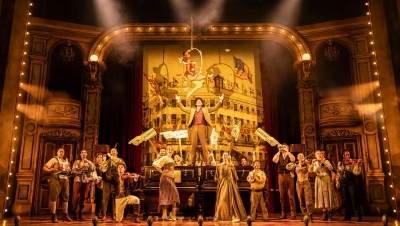
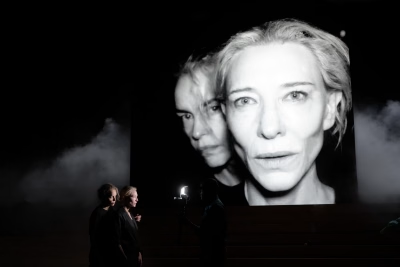
I sat down with writer Sarah Rickman to find out more about The Other Room coming to The Lion and Unicorn Theatre this October.
Can you tell me a little about your show and what audiences can expect?
The Other Room is an intimate and deeply human story about love, loss and what it means to care for someone at the end of their life. While, given the subject matter, it is an emotional play, it is also surprisingly funny.
The play is really interested in the ordinary moments that continue even when something extraordinary and devastating is happening. It asks how we carry on living while someone we love is dying.
What drew you to this specific story?
I actually dreamt the play. I know it sounds ridiculous, but it’s true!
Living grief and end-of-life care were at the forefront of my mind at the time, as some very good friends of mine had recently lost their parents. It brought up a lot of memories for me and reminded me of the paradoxical emotions involved when someone you love is dying. Grief isn’t one single emotion, and end-of-life stories are as much, if not more, about living. There can be laughter, anger, love, frustration, fear, attraction and joy all sitting alongside the sadness.
I wanted to share Grace, Chris and Themba’s story because, in many ways, it isn’t unique; so many people experience these things, but it is completely unique to them. Their relationships, their choices and the way they navigate those final months belong entirely to them. That felt like a story worth telling.
What has been the biggest challenge in bringing this production to life?
100% time! Not enough of it. It’s all been a bit of a whirlwind. Proforca presented this opportunity to us, and we grabbed it with both hands, obviously, but as always, when putting on new shows you always just want a bit more time.
From a writing perspective, there is also the practical challenge of showing Chris’s deterioration without turning him into simply a symbol of illness. He remains a person with a personality, a sense of humour and a relationship with Grace, even when his ability to communicate becomes increasingly limited.
How does the design of your show (set, sound, or lighting) impact the presentation of your story?
The one-room, kitchen setting is incredibly important, acting as a barometer as the play evolves. At the start, it is a warm, domestic space but over time is medicalised. That transformation allows the audience to see how illness gradually takes over the family’s home and their lives. The space itself changes without the characters necessarily acknowledging how much has changed.
Similarly, the hum of the Aga throughout works as a backdrop for the heartbeat, monitors, alarms and other medical sounds, to the point it becomes overwhelming until suddenly it stops.
If you could sum up the show in one word or phrase, what would it be and why?
“Surviving isn’t living” – it’s actually said in the play by Themba. Because although the play is about death, it is ultimately about living.
The Other Room runs at The Lion and Unicorn Theatre, London, on 20 – 24 October. Tickets available at https://www.thelionandunicorntheatre.com/whats-on