The story of Electra, Sophocles’s Ancient Greek tragedy full of violence, deceit, and murder, continues to linger in London’s theatre scene. Fumbled in a Brie Larson production last year, the story takes on a new form in this inventive work from Benedict Andrews, which combines the classic with Ingmar Bergman’s 1966 film and spotlights an actress whose psychological breakdown erupts during a staging of the Greek play.
Essentially a play of two distinctly different halves, Andrews’s work spends much of the first hour retelling, with terrific ferocity, Sophocles’s Greek classic. Here, on top of an enormous, ever present set of stairs, Electra, hammer in hand, is grieving the murder of her father and targets Clytemnestra, her mother, for revenge. It is a first half that becomes a psychological power play between the two women, as both parties make the other reenact the events leading up to, and the execution of, Aegisthus’s (Patrick Robinson) demise. But it is also in this climactic moment where the piece pivots, in a brilliant segue that shifts from Electra’s mental collapse into Bergman’s film, where dazzling actress Elisabeth falls silent, with her mutism baffling to doctors, resulting in her being cared for by nurse Alma who, in turn, is seemingly more of a patient than a healer than she might think.
It is a play inventive in its delivery, but also one rife with tension, casting a sense of suspense from the opening moment when, once on stage, performers Cate Blanchett and Nina Hoss ask an audience member to toss a coin and decide which roles both women will take on that evening, either Electra/Elisabeth or Clytemnestra/Alma. For this performance, it was Hoss who stepped into Electra and Elisabeth’s shoes, while Blanchett brought the mercurial Clytemnestra and Alma to life.
What is so remarkable here is that despite the last minute nature of who plays who, both performers looked superbly at ease immediately getting into role. Covered in pale white chalk makeup, Hoss immediately stomps and stamps, yelling and cursing as Electra with a ferocious anger that creates her desperate and petulant character. Gone are the ear piercing screams, but what remains is a woman on the edge, often teetering dangerously close on Magda Willi’s stark staircase, threatening to swing her hammer of justice. Yet just as the noise comes, it soon fades as Hoss, halfway through, transitions into the unsettlingly silent Elisabeth.
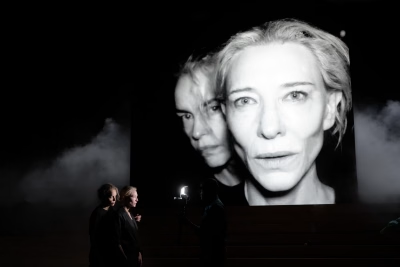
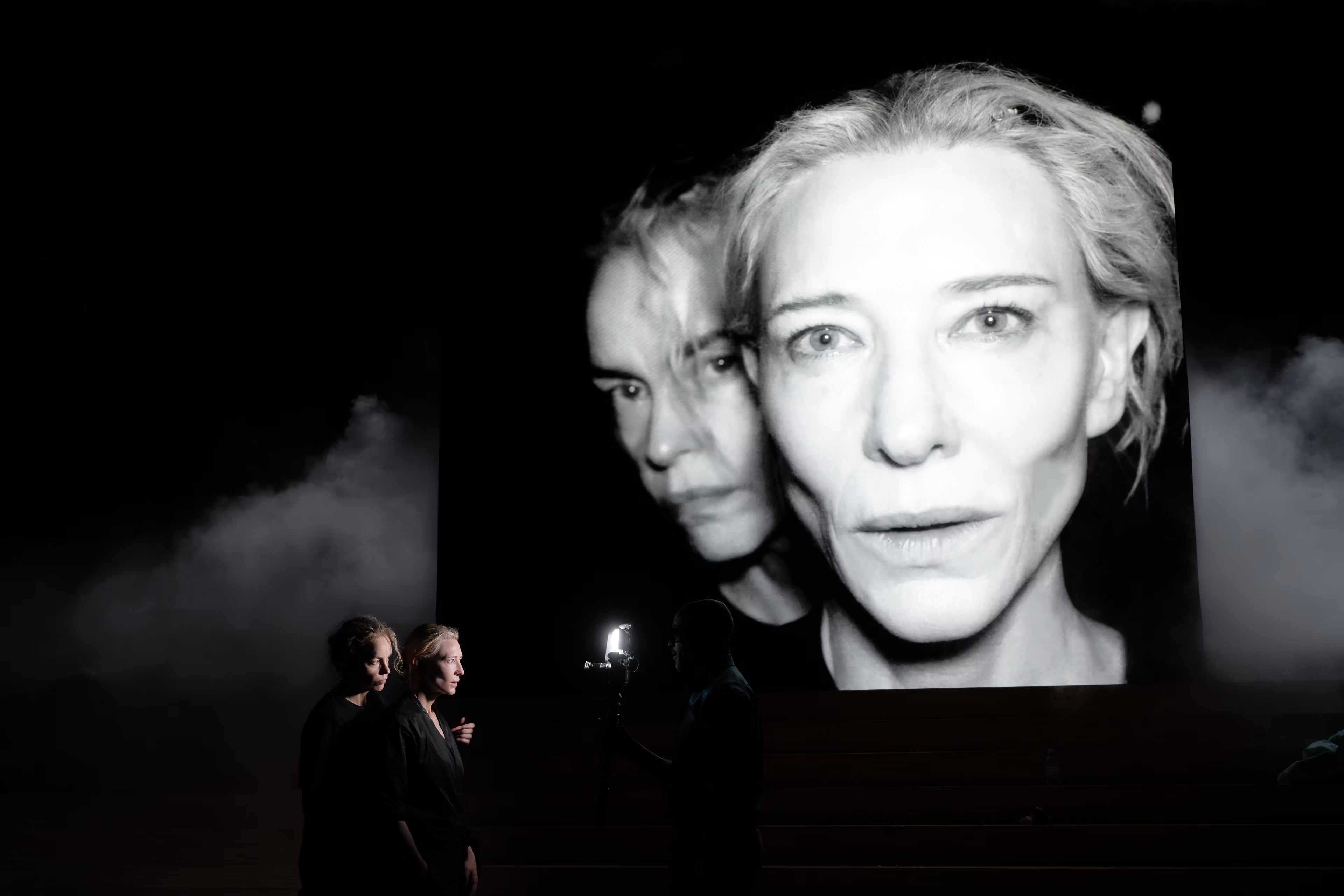
It is unclear what has driven this acclaimed actress into such a state, but what is spectacular here is Hoss’s ability to tell the story and characterise with almost no dialogue. Andrews, who also directs, makes use of an onstage camera to project both performers during the play’s second act, and it is through these screened moments where Hoss’s deft, pained facial expressions engross. Indeed, while screens are often an unwelcome addition to the stage, here they work remarkably well, whether allowing us to peek under the blanket smothered Elisabeth as she sheds a tear, or during a gripping sequence between nurse and patient, timed impeccably, that blends both women’s faces in a less than subtle but very effective way of hammering home the play’s ideas about identity and duality.
Meanwhile, Blanchett’s powerful portrayal of murderess Clytemnestra and the oversharing nurse Alma neatly blend here. While both characters, it would seem, should be starkly different, Blanchett, as well as Andrews’s writing, pulls out the intriguing similarities of women on a precipice and the toll it has on their psyche. Blanchett oozes glamour as Clytemnestra, whether strutting in a fur coat or standing with pride over her daughter, yet there is also a clear fragility pulled out when Aegisthus’s murder is replayed.
Yet where Blanchett truly shines is in the ‘Persona’ half of the play, where, as Alma, Blanchett speaks almost exclusively, gradually eroded by Elisabeth’s silence and exposing her true thoughts and self in potentially damaging reveals. What starts as something quite fun and provocative, especially when Alma reveals her previous, eyebrow raising sexual history, becomes something much darker as a betrayal leaves her threatened and unveiled.
Despite the differences in time period and setting, what remains so starkly vibrant throughout both parts of this story is the vulnerability of women on the fringes of society, pushing back against how society expects them to behave. It is a production that enables the two leads to luxuriate at the top of their game, with an uninterrupted two hour runtime that is impressive in its conjoining of the two narratives. The decision to integrate some of the performance into the audience, using Ella Lily Hyland as either Chrysothemis or Anna who interjects, is a neat touch but never quite lives up to its potential despite Hyland’s energy. Robinson’s unsettled husband characters, meanwhile, hover, but the play works hard to keep its focus on the women.
While some design and directorial choices, such as moving some of the action offstage and into the National’s backstage area, lose focus, others, including a brilliant use of clothing to layer the staircase, are impactful. Even though it is a play split into two distinct parts, it is the blended middle, and the danger of duality and duplicity, that Electra/Persona scrutinises best, propelled by its brilliant leading actors.