Writing in his autobiography Present Indicative, Noël Coward lamented the chaos and mannerless weekend he spent visiting actress Laurette Taylor and her playwright husband Hartley Manners. In fact, Coward went on to praise Fate for not intervening further, in the sense that no one else found inspiration for a play in the Manners-Taylor household as he did, using his experiences during that fateful weekend to catalyse his delivery of the dreadful Bliss family in Hay Fever.
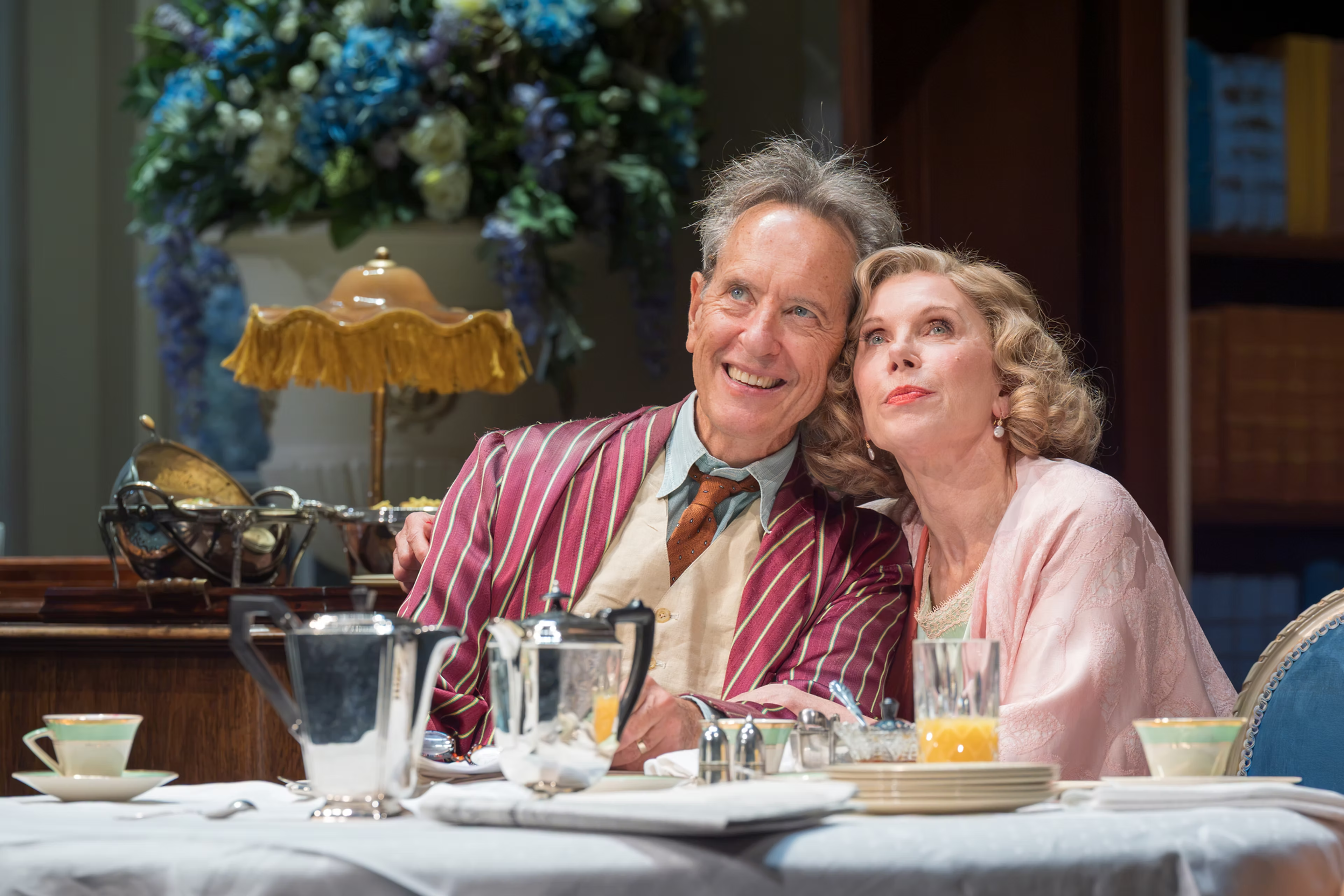
Set in a lavish and expansive English country house in the 1920s, Coward’s comedy centres around the genuinely awful Bliss family, headed by snobbish writer David (Richard E. Grant) and his gloriously dreadful wife, retired actress Judith (Christine Baranski, making her West End debut). The couple are surrounded by their stubborn and spoilt children, Sorel (Ophelia Lovibond) and Simon (Will Close). What becomes immediately clear is the sense of performance that lingers within the family, both artistic and emotional. This comes to a chaotic head when four guests arrive, each at the request of a different Bliss family member, resulting in a hilariously disastrous night of debauchery and revelry as Judith and David’s parlour games threaten to spiral out of control.
As Judith, Baranski is sublime in her forced grace and poise, emphasising a character who cannot bear to be away from an admiring audience. Baranski’s sharp wit shines through in deftly delivered one-liners and dismissive looks, in a comedy that soon circles Judith’s absorbing matriarchal figure. Judith’s eye for toy-boy Sandy (performed terrifically gormlessly by Ash Hunter) earns laughs, while her desire to control those around her comes to the fore during a brilliantly choreographed parlour game sequence under Emily Burns’s direction.
Grant’s David is lacking in the first half, appearing only fleetingly from upstairs to bemoan his family’s noise before the bemusing dinner party closing Act One. Yet despite the delay, Grant quickly establishes a charming yet scheming character, first trying to set his son Simon up with the amusingly meek flapper girl Jackie (Lucy Karczewski) before setting his leering sights on Nancy Carroll’s sharp-tongued Myra, initially Simon’s older love interest.
Coward’s trademark witty dialogue shines brightly as all nine performers brim with comic timing. While the Bliss family soar with a delightful blend of being utterly awful yet utterly captivating, their ensnared guests are equally funny in their beleaguered attempts to appease their hosts and make their escape. This is compounded by Jo McInnes’s scene-stealing turn as grumpy housekeeper Clara, who, having been Judith’s dresser during her acting days, now finds herself begrudgingly serving the Bliss family and their guests, tossing down china and half-heartedly welcoming visitors in a performance full of sharp comic timing.
Indeed, despite the myriad connections between the various characters, Coward’s writing and Burns’s direction do a great job of making the Blisses’ lack of manners and obvious targeting of their guests clear from the outset. That said, the piece takes a little while to settle, with an opening scene and exchanges between Judith and her children that feel heavy in plot and light in laughter.
However, it is a piece that, like the Bliss family themselves, enjoys teasing both the guests and the audience about what is actually taking place, leaning heavily on duplicity and performance for entertainment’s sake. This is enhanced by Frankie Bradshaw’s gorgeous set design, which evokes the grandeur of the Bliss residence while offering ample comedic opportunity for quick entrances, exits, and slapstick moments.
The decision to maintain the piece as a two-act play with an interval does arrest some of the comedic momentum, especially with a lengthy scene change during the second half. Nevertheless, once the Bliss family’s atrocious treatment of their guests gets fully underway, obnoxious and overwhelming, Hay Fever becomes a dinner party rich in laughs, wit, and hosts from hell.