The Camden Fringe is almost upon us, providing one of the best times in the capital to get into Fringe theatre, and the stories it can tell. To get prepared for the festival, Read About Stuff is running a ‘Five From The Fringe’ interview series, where creative teams answer five questions about their upcoming Festival shows.
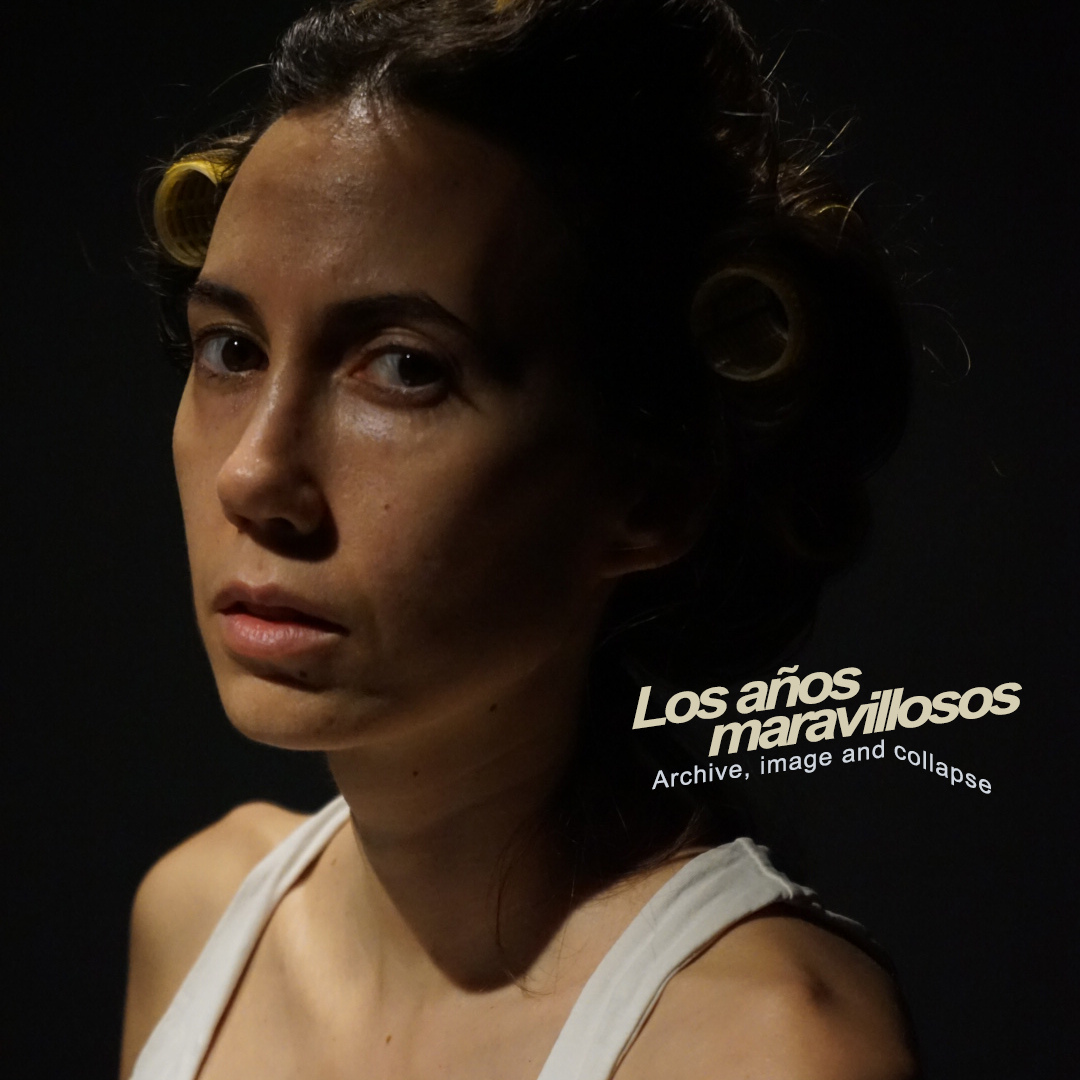
In this interview, I chat to Diego Beares about their new show Los años maravillosos: Archive, Image and Collapse.
Can you tell me a little about your show and what audiences can expect?
It all begins with a newspaper interview published in Uruguay in 1971. A twenty-five-year-old model speaks about the future with a confidence that feels deeply moving today. That young woman was my mother.
But the play is not really about her. Nor is it about Diana Spencer, who appears throughout the performance as a constant presence. It is about something that belongs to all of us: the distance between the person we imagined we would become and the person we eventually became.
I’d like to think audiences won’t leave the theatre thinking about Lilian or Diana, but about their own lives.
What drew you to this specific story, and why does it belong at the Camden Fringe?
This play began as a personal necessity. I wasn’t trying to write a play. I felt the need to return to my family’s archive, to revisit a place that no longer existed. The writing came afterwards.
Over time, I realised I wasn’t simply uncovering my mother’s story. I had found a question that belongs to all of us: what happens to the person we imagined we would become… and never did?
Although everything began with the newspaper interview, I never wanted to write a biography. It was during the writing process that I realised the play’s destination was, inevitably, London. Diana Spencer became a natural bridge for that story to find a dialogue with British audiences.
What has been the biggest challenge in bringing this production to life?
The biggest challenge was discovering what the play shouldn’t be.
Whenever it drifted too close to my mother’s biography, I knew I was losing its true direction. She had to stop being my mother and simply become a woman in whom anyone could recognise themselves.
I think that was the moment the play stopped belonging only to me and began belonging to the audience as well.
How does the design of your show (set, sound, or lighting) impact the presentation of your story?
I always knew I didn’t want to reconstruct the past.
The archive, the projections and the voices are not there to prove what happened. They’re there to remind us that memory is always made of fragments. We never remember exactly what happened; we remember what time has chosen to preserve.
The rest is completed by the audience’s imagination. And that’s precisely where theatre begins.
If you could sum up the show in one word or phrase, what would it be and why?
“What we imagined we would become… and never did.”
Because I think we all live with the distance between the person we imagined we would become and the person we eventually became. The play begins with that question. It doesn’t try to answer it. It simply invites the audience to share it.
Los años maravillosos: Archive, Image and Collapse runs at Etcetera Theatre from August 13th – 17th. Tickets can be purchased here: https://camdenfringe.com/events/los-anos-maravillosos-archive-image-and-collapse/


