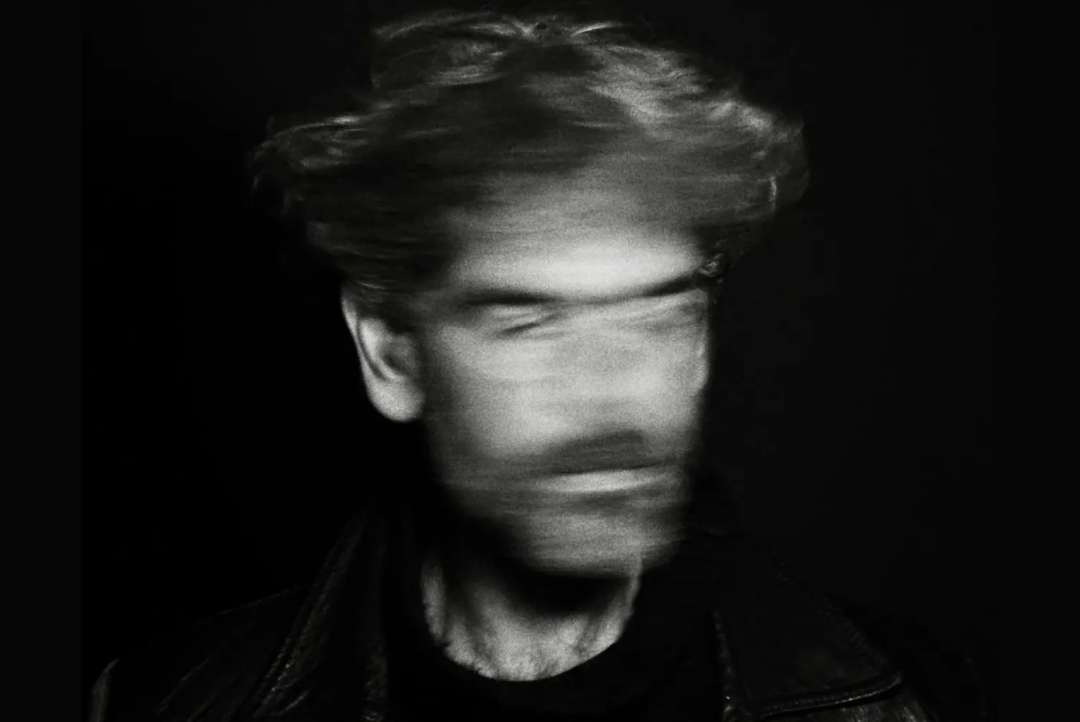
The Camden Fringe is almost upon us, providing one of the best times in the capital to get into Fringe theatre, and the stories it can tell. To get prepared for the festival, Read About Stuff is running a ‘Five From The Fringe’ interview series, where creative teams answer five questions about their upcoming Festival shows.
In this interview, I chat to Ziyi Cao and Mehmet Ali Nuroğlu about their show Dünyada.
Can you tell me a little about your show and what audiences can expect?
Ziyi: Dünyada is an experimental solo performance about a stranger trying to recall where he comes from, where he belongs, and whether such a place even exists.
It begins as a monologue, and very quickly becomes something else. The performer is alone on stage, but he is also accompanied by yours and my presence. The viewer becomes part of the world of the play. One audience may become a father, a friend, or a ghost from the past.
The audience can expect something intimate, funny, strange and exposed. It is a story, an event happening in the room, a search for connection. An experience.
What drew you to this specific story, and why does it belong at the Camden Fringe?
Ziyi: The piece is inspired by Will Eno’s Title and Deed, a text that speaks with great humour and sadness. It has a very particular rhythm: sketchy on the surface, but with philosophical weight underneath.
What drew us to it was the feeling that this is the story of one displaced person. And that it is also a very contemporary condition. So many of us live between languages, countries, cultures, homes, versions of ourselves. We are surrounded, yet often feel more isolated than ever.Camden Fringe feels like the right place for this work because it gives space to forms that are not easily categorised. Dünyada comes from Istanbul’s independent theatre scene, and this is its UK debut. Bringing it to London feels like extending the question of the play itself: what happens when a soul leaves one home and tries to find another?
What has been the biggest challenge in bringing this production to life?
Mehmet: Will Eno is not a very well-known playwright in our country. Although his play Thom Pain has been performed at various times under different names, unfortunately, there’s still no published Turkish translation of it. Yet, these are texts that are as enjoyable to read as they are to perform. They’re filled with subtle references to contemporary literature, theatre tradition, and philosophy… writings that carry a vast realm of associations beneath a seemingly simple surface.
Our play Dünyada, originally titled “Title and Deed”, was the first of Eno’s works I ever read. It was right after the pandemic, a time when I found myself back in Ankara and back in theatre after years away. The translator of the play, Ayberk Erkay, recommended it to me.
When I read it, I realised the text was troubled by the same questions that troubled me, that it gave voice to issues I couldn’t articulate myself. Its structure also matched my staging ideas and allowed for the kind of exploration I wanted to pursue. At the time, I didn’t get the chance to work on it, but two years later, when the conditions finally aligned, we began rehearsing the text.
The central theme of the play is alienation, not only linguistic, cultural, and spatial, but also alienation from oneself, from one’s past, from the world. It’s a kind of rootless homelessness built from a longing for home, a solitude founded on the hope of connection, a feverish monologue born from doubt in language, yet yearning for dialogue. Words about the insufficiency of words…
How does the design of your show (set, sound, or lighting) impact the presentation of your story?
Mehmet: The man in the play tells various stories, fragmented pieces of narrative whose truthfulness we can’t be sure of. Are they real or invented? He tells them not in a linear way, but sporadically, entering mid-sentence, rarely offering clear beginnings or endings.
We don’t even know if he’s really able to tell them, neither he, nor I, nor the audience.
We support this peculiar narration with visual imagery, a choreography of light and sound, and sudden appearances of music. In this way, we aim to open an additional visual and auditory dimension to the play’s associative texture, to trigger subconscious responses in the audience. Rather than manipulating them with our own narrative and imagery toward a single meaning, we seek to create a freer, more personal space for associative experience.
As many audiences as there are, that many different performances come into being, and from this diversity of experiences, an intense energy emerges.
It can be surprising and challenging, since it’s quite different from the familiar, but in the end, I observe that audiences truly leave the theatre having brought something to light within themselves.
That’s what the writer hopes for too. Near the end of the play, the Man says: “I had wanted to leave you with something.
If you could sum up the show in one word or phrase, what would it be and why?
Ziyi: Theatre through the Kino-Eye.
A camera enters the room like another nervous system.
Echoing with Dziga Vertov’s idea of the camera as an eye that sees beyond ordinary human vision, in Dünyada, it sees before language has settled. It catches a face, a hand, a hesitation. It cuts the distance between performer and audience, then leaves the image hanging above them like a second memory.
The stage becomes a place where looking has weight. A spectator’s face turns into a father, a friend, a ghost. The performer stands between body and screen, between presence and projection, trying to locate himself inside the images that answer him.
Dünyada runs at The Cockpit Theatre from 3rd – 9th August. Tickets can be purchased here: https://camdenfringe.com/events/dunyada/


