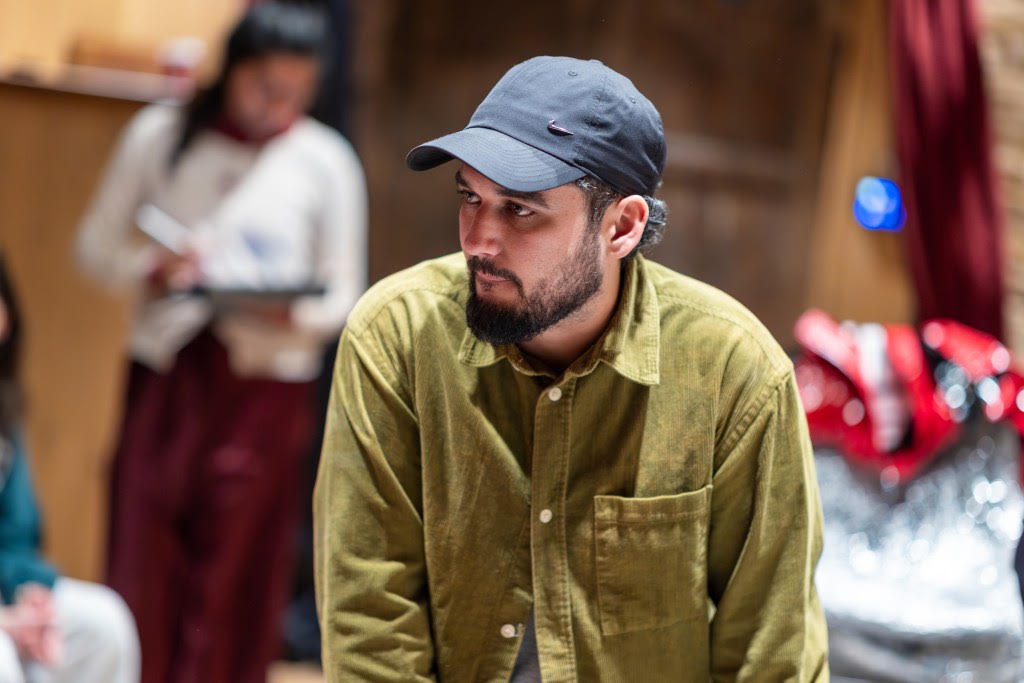
I sat down with director Adam Karim to find out more about An Intervention coming to the Riverside Studios in January.
An Intervention uses a personal friendship to explore the 2003 Western intervention in the Arab World. How do you balance the intimate dynamics of friendship with such heavy political themes?
The personal and political are indivisible for Global Majority people in the UK. With our ongoing catastrophic foreign policy, this is true especially of us brown ones and especially those visibly muslim. Apathy, ignorance or selfishness are all still political choices. But this play is brilliant because it doesn’t let us off the hook wherever we stand on that political spectrum, and it does it by asking us questions about how we treat those we love – which is universal.
The balance from a theatre-making point of view is that the capital P ‘Political’ content of the play speaks for itself in the events of the world-building, but relationships – how we move through the world, the choices we make, and the dilemmas we face in them – that’s the small p ‘politics’ and the really juicy stuff of all great drama. Our job is to look into the ugly little crevices of that, and to sit in some of the profound questions of human nature, our understanding of our place in the world – not to lecture anyone on the big political issues.
What drew you back to Mike Bartlett’s play for this revival, and why do you feel it resonates so strongly with current global events?
Sadly, current events have only made this production more relevant as time has passed. When we first started talking about staging this play, October 7th hadn’t happened, the genocide hadn’t begun, and the decision to directly attack Iran hadn’t either. As brown people in this country, we’re used to being gaslit, scapegoated and demonised to justify terrible policy, but we rarely get an opportunity to talk about how those policies can actually infect our own community.
As we’ve seen at an extreme end with the Priti Patels, Zia Yusufs and Shabana Mahmouds of the political world, our communities aren’t immune to right-wing thought, and this play was relevant to us before all of these terrible events, but they have sharpened the urgency of this conversation and really changed some of the creative direction. It’s impossible to ignore, and yet so many are trying so hard to.
As this appears to be the first UK production staged by Global Majority artists, what new layers or perspectives has this creative team uncovered in the text?
Telling this story through South Asian and SWANA artists allows us to ask some knotty questions about how we respond as a community. The predicament of Mike’s play – What does solidarity actually mean? Can you have it for those you violently disagree with? – changes entirely once it’s looked at through this lens. Because we aren’t a monolith, we have a wide range of opinions on these ongoing Western ‘Interventions’, including those who would support a ‘Blair doctrine’ or even more aggressive foreign policy – particularly on Iran.
As the communities directly affected by 20+ years of demonisation and brutalisation, it’s about time we had this conversation ourselves. Audiences can draw their own conclusions about the resonance with the Israeli genocide on Palestine, the ongoing war of attrition with Iran, or the countless other conflicts that abound, but what this play is really about is the ways we bind together in response. It’s a unique predicament, being brown in the West!
The play touches on heavy themes like foreign policy, culture wars, and conflict, yet you mention its humour and warmth. How do you navigate those shifts in tone in rehearsal?
The play is really funny! Which is remarkable given the themes mentioned, isn’t it? But it really is. I think the difference with this production is that it will also be surprisingly tender, and the humour takes on a slightly darker, gallows humour quality at times – both cathartic and delicious!
I think the best comedy comes from character and situation and really is no different to drama in the technical sense of making it work. The difference is all about timing.
If you could sum up the core message or impact of this production in one word or phrase, what would it be and why?
Love and possibility. It’s hard to have hope in this world sometimes, but we have to remember that as long as we still have each other and people we love, then there is some possibility of better to come – even if hope itself is hard to kindle.
An Intervention runs at Riverside Studios, London, on 11 January – 14 February 2027. Tickets available at https://riversidestudios.co.uk/whats-on/uGA-an-intervention/