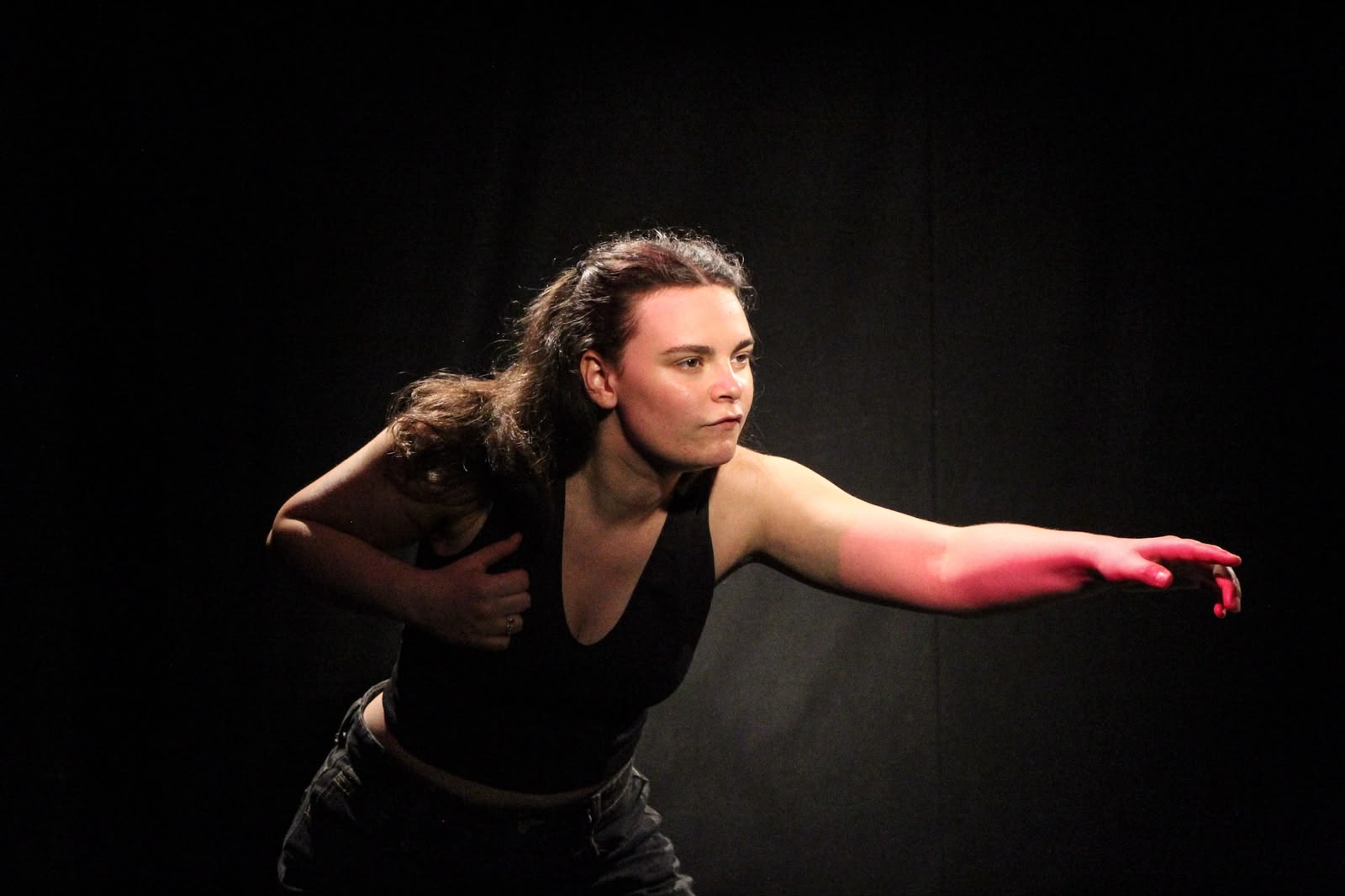
I sat down with writer Josie Rose Embleton and director Esther Fernández Guerra to find out more about One Man’s Land coming to the Etcetera Theatre this November.
Can you tell me a little about your show and what audiences can expect?
Josie Rose Embleton: Ageism, wealth disparity, the housing crisis, and a chihuahua; all of this set in a field in the middle of nowhere. In a nutshell, this one-woman show follows a uniquely characterful and slightly unhinged narrator, Margaret, who has recently moved to the Yorkshire countryside to get away from the chaos and concrete of London. Little did she know that the histories of her newly inhabited battlefield seemed only to be repeating through an ever-escalating conflict with her next-door neighbour, Mrs Prolium, alongside her pack of terror dogs. The argument? Over one square meter of garden grass. Seem petty enough? From their disastrous first encounter, their interactions spiral past the point of no return and on to an explosive finish. Literally. I’d say pretty confidently that audiences can expect to go on the emotional rollercoaster that Margaret also rides: one moment rolling on the floor laughing at her unmatchable wit (or so she would say), the next, you could be drying your eyes. It’s a show that really doesn’t hold back, and dare I say, even at points, exposes our very nature as humans, and will take you on a journey of increasingly questionable decisions.
Esther Fernández Guerra: Audiences can expect a fast-moving story, brimming with nonsensical characters and taken out of proportions situations with completely justified reactions from the protagonist and an absolutely (un)reliable protagonist: Margaret.
What drew you to this specific story?
Josie: It all started as my final project thesis for LAMDA; we had to write or create literally any form of performance that lasted twenty minutes that was loosely connected to classical theatre. I was in Henry VI at the time, and there was a scene based on a battlefield, between two ordinary soldiers, and I thought how interesting it was that Shakespeare, amongst these kings and queens, and huge events within the Wars of the Roses that he was writing about, decided to dedicate a whole scene and zoom in to some ordinary people in the midst of it all. So I then thought, well, why not write something about two individuals fighting a petty war of their own, on a historic battlefield but set in modern-day. It all went from there, really. I loved the comedy that comes from people being so invested in something so small, like a little patch of grass in the garden on a field in the middle of nowhere; it’s like, no one cares, and there are so many bigger things and issues in the world, but it just shows how all of us, every one of us, can get so petty and fixated on things, and it’s actually really very easy to slip into the darker side of our nature, on both the macro and micro scales. So, I wanted to shine a light on that in a sort of unconventional way. I wanted a story that would explore themes important to be discussed: land ownership, the housing crisis, territorial conflict, all the things I wanted the audience to be thinking about, but sort of hidden beneath the surface of these ridiculous characters. I wanted a story that left the audience laughing, but thinking too.
Esther: I got to know Josie’s wicked play when we bumped into a London cafe, and I offered to read the 20-minute version. Then Josie sent me a filmed version of the script, and I found it so funny, witty and delicious that I knew I had to be involved in it. I particularly loved the fact that the protagonist of the story is the furthest away from a perfect, lovable character and an unreliable narrator to top that up. “Women are rarely portrayed like that unless it is from the perspective of a man, and then it is all pure sexism and male victimhood. So a bad woman in a play where the story and the questionably wrong things that she does have nothing to do with men or a response to male violence… sign me up!” This is not what I said to Josie when I put myself forward as a director for her play, but I wish I had.
What has been the biggest challenge in bringing this production to life?
Josie: As an emerging actor-writer, straight out of drama school, it can always be a bit hit or miss in the industry. The arts are and have always been notoriously challenging to break into, but there are opportunities and platforms for new work, which has been really encouraging to see. I also want to note that I have been incredibly lucky with my creative team; an all-female, international, LAMDA alumni powerhouse that has been so brilliantly committed and dedicated to this piece. But I think I can speak for all of us when saying that the biggest challenge has just been trying to get this show on stage in the first place, and get the right people to take a chance on a group of emerging artists collaborating to create completely new work.
Esther: Great question! I had a very particular challenge with this play. My personal challenge was to direct this play whilst being pregnant and right after giving birth. I think that pretty much covers the whole experience for me. That being said, choreographing the physical landscape of the play and the many characters was the hardest part, as I wanted to make sure that the story was clear, the characters unique and distinct from one another, all of this with a fast-paced and dynamic rhythm.
How does the design of your show (set, sound, or lighting) impact the presentation of your story?
Josie: Listen, we ain’t got the budget to get Margaret’s neighbours’ mansion on stage, so of course we had to be a little minimal. But, in all honesty, I think this show is all about playing on the audience’s imagination alone. Having said that, we have brilliant lighting and sound designers, Tara and EJ and the tech really aids our ability to transport the audience.
Esther: It was very clear from the beginning that imagination is the most powerful tool we have, so keeping the props and set (and costume!) to an absolute minimum was the key to transport the story from scenario to scenario and what would allow Josie to switch between characters seamlessly. It is about using acting skills to their maximum expression.
That being said, Margaret is the storyteller and an untrustworthy one. So she needed to be at the helm of the performance, in control of what is heard and seen. The concept or the focus of the presentation of the story is that it is all about Margaret painting the images that pop into the audience’s mind as she tries to convince them of her self-righteousness to act as she does. Therefore light and sound are crucial to the character to demonstrate and paint the story before our eyes. So instead of having a bare lighting and sound design, Margaret uses them as much as she can, almost like scene partners on her mission to recreate her story.
If you could sum up the show in one word or phrase, what would it be and why?
Josie: Love thy neighbour – it’s a classic, but after you watch this show, you’ll really know what we mean.
Esther: In the search of peace and thwarted by pride, Margaret goes to war with her pious neighbour. I would also say to audiences: “buckle up and don’t be late!”
One Man’s Land runs at the Etcetera Theatre, London, on 16 November. Tickets available at https://events.humanitix.com/one-man-s-land


