The Edinburgh Fringe is almost upon us and to get prepared for another Scottish summer Read About Stuff is running a ‘Five From The Fringe’ interview series, where creative teams answer five questions about their upcoming Festival shows.
In this interview, I chat to Michael about the production he has written, produced and everything else in between, The Last Bantam.
Can you tell me a little about your show and what audiences can expect?
The Last Bantam is a one-man play telling the story of Britain’s Great War ‘bantam’ soldiers, 30,000 men between 5′-5’3” who signed up to fight. This story is told through the eyes of Patrick Michael Wolfe, a teacher from Dublin. He signs up in 1915 to help secure Home Rule for Ireland. The action ranges from the city of Dublin to the killing fields of France, and it is a story about patriotism, prejudice, courage and betrayal. It is inspired by real events.
The Last Bantam is set in a dugout near the Frontline in France. The audience are a group of reporters who’ve come to write about the Bantams. Instead of a battalion of a thousand men however, they find just one Bantam left – Patrick Michael Wolfe. He tells them what they need to write their story, but he doesn’t have long. He has to go soon, on one last mission…
What drew you to this specific story, and why does it belong at the Edinburgh Fringe?
I was fascinated by the story of the Bantams. I’m Bantam-sized myself, and I strongly identify with those men. I know what it is to exist in a world where almost everyone is taller than you and how that can shape their perception of you and your perception of yourself. I was also inspired by the Bantam’s story. They signed up in their thousands when they did not have to, they did their duty, and many never came home.
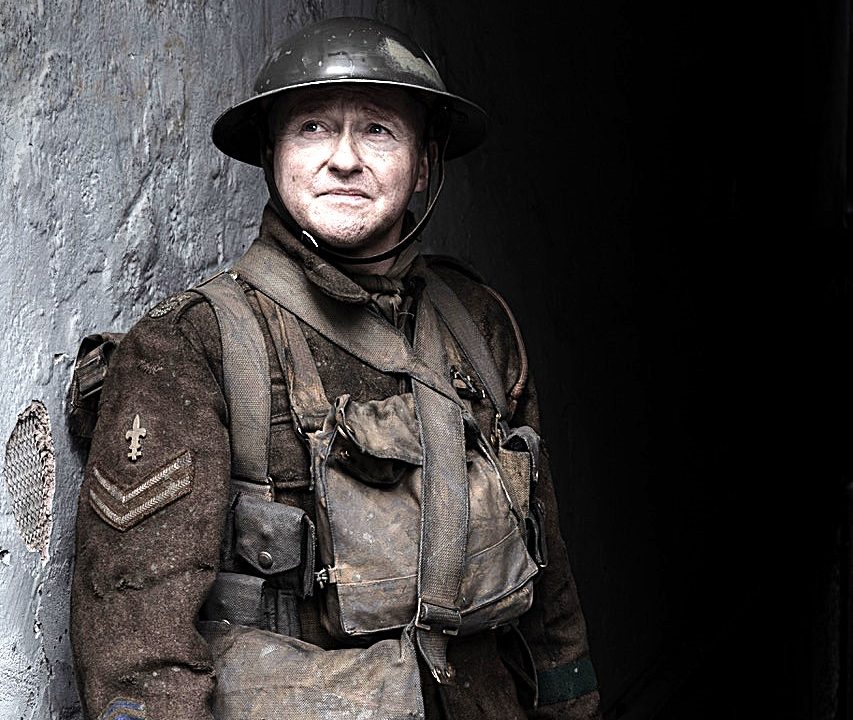
Why does The Last Bantam belong in the Edinburgh Fringe? Gosh! Where do I start? First of all, it’s very entertaining. I take the audience from the city of Dublin to the Frontline in France with humour as well as pathos. There’s jokes, a song and tragedy in the mix. The audience will also learn about the Bantams, who they were, why they signed up and what happened to them. Almost everyone who comes to my show had someone who served, and my story also speaks strongly to them. It doesn’t hurt that my costume is extremely authentic-looking. I’ve done my best to make my uniform as period and context-accurate as possible. My character really does look like he’s spent the last two years on the Frontline!
There’s also the Irish dimension. 200,000 Irishmen fought in the Great War, but there are very few plays examining the experiences of Irish nationalists who enlisted. There’s Sean O’Casey’s, ‘The Silver Tassie’, George Bernard Shaw’s, ‘O’Flaherty V.C.’ and Dermot Bolger’s ‘Walking the Road’ and, as far as I’m aware, that’s it. My character signs up to help secure Home Rule for Ireland and he struggles to come to terms with both the events of Easter 1916 and the aftermath. Audiences find the Irish element of the play particularly interesting. They know about the rebellion but are usually unaware that in 1914 Ireland was all set to have its own devolved domestic government. The Last Bantam reminds us of that.
What has been the biggest challenge in bringing this production to life?
Learning the lines! I wrote the first draft of the play in 2-3 days and it was easy to book my slot in the Edinburgh Fringe. Learning the script was the big challenge though. I had no acting training so I used the ‘one line at a time’ method. I’d learn the first line, say it ten times, then learn the second line. I’d say the second line ten times then say the first and second line ten times. Then I’d add the third line, say it ten times and so on… Next thing you know you’ve learned a whole paragraph! My method is undoubtedly quite laborious, but it works. Now my script’s like a song in my head. Each word and each sentence automatically follows the previous one.
How does the design of your show (set, sound, or lighting) impact the presentation of your story?
My set design is extremely basic. A black backcloth and a small table with a map, notebook and water canteen resting on it. I’d love for my set to look like a trench dugout but my budget doesn’t go that far. Sound and lighting do play important roles though. I use sound to create the mood as my audience takes their seats and again at various points of high drama. Lighting is also used in the night attack scene, the battle scene and the gas attack. Depending on where I’m playing, we can create some very evocative light and sound effects that add to the story.
If you could sum up the show in one word or phrase, what would it be and why?
‘A man isn’t measured in inches. He’s measured in heart.’
This phrase challenges the idea, as common today as in 1914, that shorter men are lesser men. It acknowledges that Bantams fought just as hard and sacrificed just as much as their regular-sized comrades.
The Last Bantam runs at Paradise at Augustine’s, George IV Bridge (Venue 152) from August 7th – 15th. Tickets can be purchased here: https://www.edfringe.com/tickets/whats-on/the-last-bantam


