The Edinburgh Fringe is almost upon us and to get prepared for another Scottish summer Read About Stuff is running a ‘Five From The Fringe’ interview series, where creative teams answer five questions about their upcoming Festival shows.
In this interview, I chat to Benjamin Evett about their show The Witches of Macbeth.
Can you tell me a little about your show and what audiences can expect?
The Witches of Macbeth is a tight, 4-actor, 75-minute adaptation of Shakespeare’s classic tragedy.
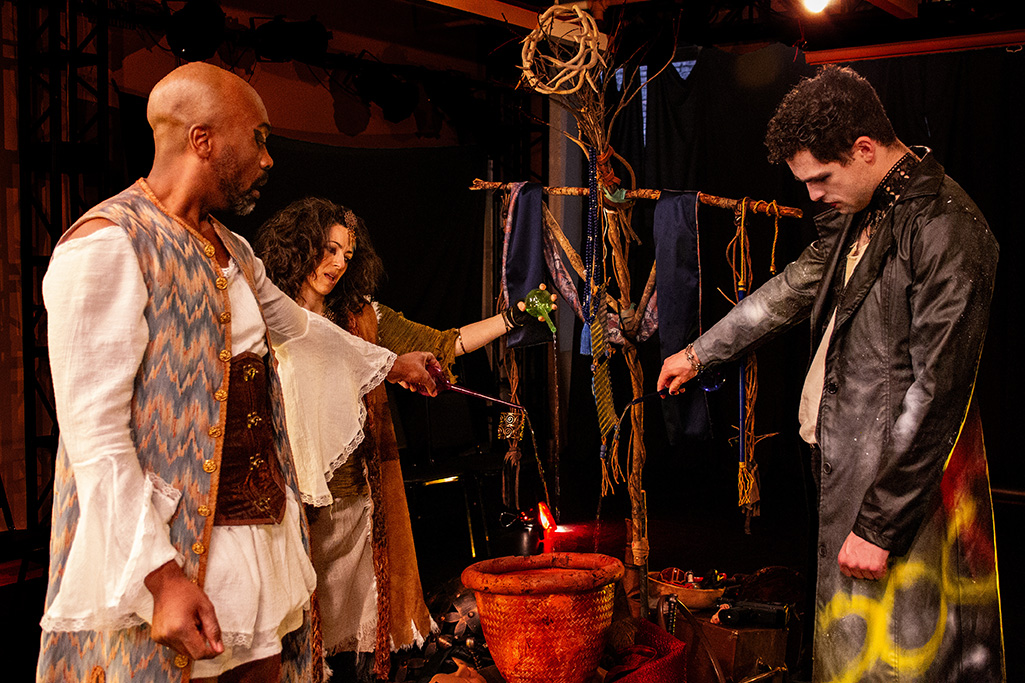
Three immortal witches, servants of the ancient goddess Inanna, engage in a ritual retelling of the Macbeth myth, enchanting an unsuspecting “member of the audience” to play the role of the infamous Thane. They play all the other roles, leading Macbeth to the heights of power and using his own weakness to destroy him as a ritual sacrifice for the rebirth of the community.
Audiences can expect several things. First, they can enjoy an intense, vibrant performance of this immortal story from a fresh point of view that will make them hear it like they never have. Second, they can enjoy the transformative gifts of amazing actors, who flow seamlessly from role to role.
What drew you to this specific story, and why does it belong at the Edinburgh Fringe?
Macbeth is always an audience pleaser, but its relevance is more pronounced today than ever. The rise of autocrats around the world in the past decade, the glorification of selfishness and ambition, the acceptance of violence as the first choice to solve disputes or achieve one’s goals, all these make Macbeth sing with relevance. It’s no wonder that there are a number of Macbeth-inspired shows at the Fringe this year.
Fringe audiences want something fresh and innovative, and our approach unwraps this classic play in fun and exciting ways. Macbeth’s rise and fall is mirrored in the journey of the goddess Inanna into the Underworld, as told in a 4000-year-old Sumerian epic that we incorporate into the text and action of the play. It puts Macbeth into a mythic context that makes the tragedy both epic and deeply personal.
Next, the Fringe loves performers, and what they do, and presenting this classic story with only four actors highlights the virtuosity of the actors.
Finally, setting the story in the context of a ritual involves the audience in the show in a special way. They are more than observers — they become witnesses, even participants in the action.
What has been the biggest challenge in bringing this production to life?
The biggest challenge is that we have three actors playing all the characters except Macbeth. Figuring out how to delineate the characters so the audience can follow the action, and figuring out how to transition between characters, has been a challenging, but really enjoyable, process.
Macbeth is the shortest of Shakespeare’s tragedies, but there’s still a lot of play there. Cutting the play so that it will fit into a Fringe time slot, in a way that tells the story clearly, gives the characters room to breathe, and lets the language work its magic has been a challenge. The fact that we have incorporated language from the Sumerian epic Inanna’s Descent Into the Underworld adds a level of complexity to that work, but also makes the text even richer and more interesting.
How does the design of your show (set, sound, or lighting) impact the presentation of your story?
As I mentioned above, we need to figure out how to delineate the characters so they are recognisable and consistent. Props and costume pieces play a pivotal role in that process. Presenting the play as a ritual, the props become ritual objects, laid out on an altar for the actors to take as they need them. It provides a way to introduce the props in a way that fits into the world we are creating, that is artistically coherent and interesting, not just practical. It’s always satisfying when you can solve technical challenges with artistic solutions.
If you could sum up the show in one word or phrase, what would it be and why?
Tragedy as Ritual.
We re-centre Macbeth within an eternal cycle, where life, death, desire, triumph and defeat rise, fall, and are renewed; where we are all, to a greater or lesser extent, subject to powerful forces beyond our control.
The Witches of Macbeth runs at Venue 45 at theSpace @ Venue 45(Venue 45) from August 14th – 22nd. Tickets can be purchased here: https://www.edfringe.com/tickets/whats-on/the-witches-of-macbeth


