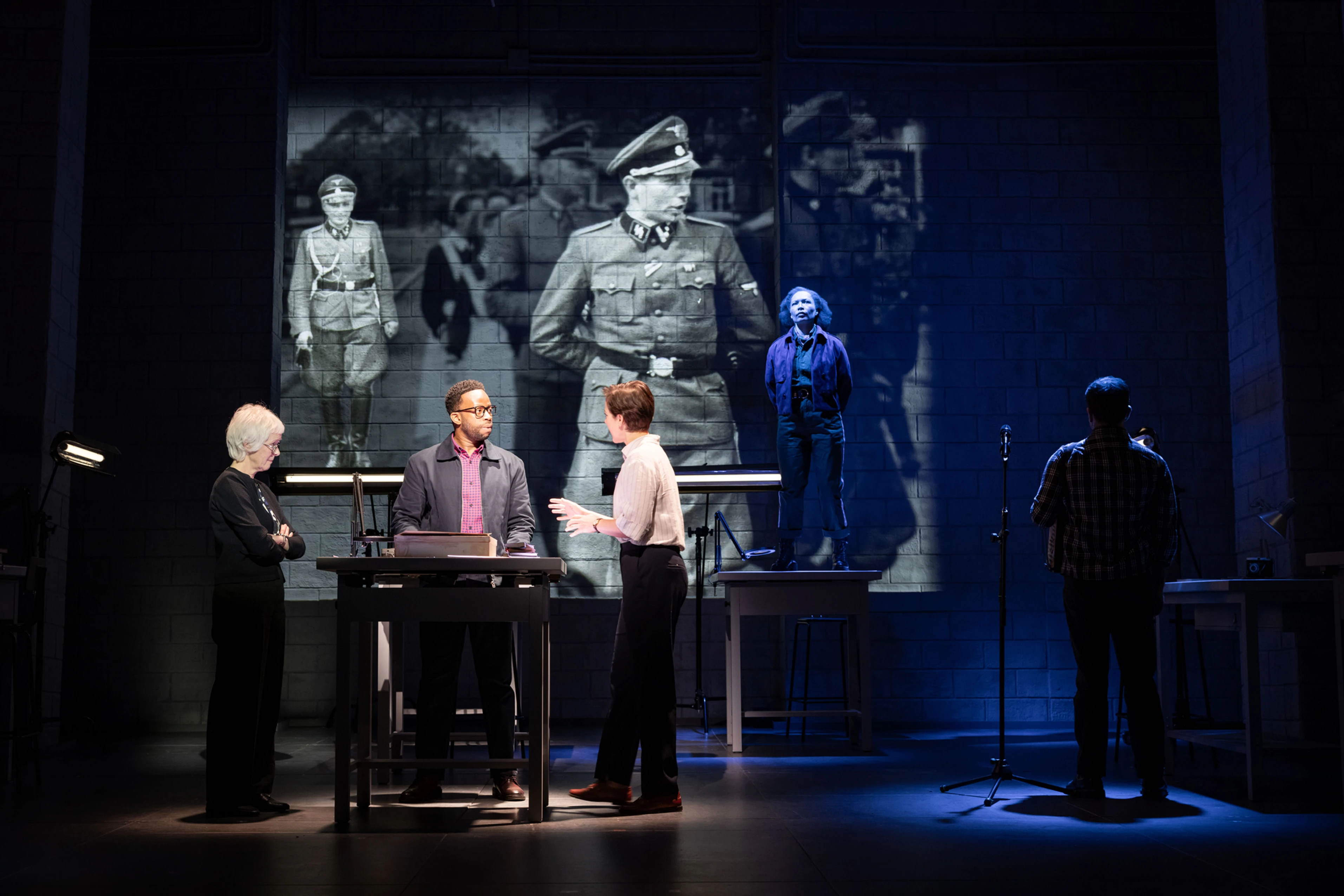
What does a photo actually tell us? It is an interesting question. While the image in the frame can tell us anything and everything, it is what is outside of the frame, the shots not taken, that can be the most thought-provoking. But, then, what about the photos we do not want to see? It is that fascinating conundrum, centred around a collection of photos found from Auschwitz, but focusing on the lives of the Nazi officers and their families, that is spotlighted so impeccably in this terrific and terrifying production.
Here There Are Blueberries is a superb blend of theatrical genres. Part verbatim, part investigative, the production, from Tectonic Theater Project, is a piece rich in humanity and exploring the human condition. The piece is based upon a true story, when an album of Nazi-era photographs arrives at the desk of a U.S. Holocaust Memorial Museum archivist, where it comes under investigation for the shocking, starkly normal content these photos consist of, while the team reconcile with whether these photos deserve to be seen at all. It is soon revealed that the album belongs to Nazi officer Karl-Friedrich Höcker, depicting SS officers and staff relaxing, singing, and eating blueberries, just miles from where mass murder was occurring.
It is a fantastic concept, but what makes it all the more brutal is the fierce reality that these photos are legitimate records of ‘normal’ life in the death camps. Officers capture their holiday snaps, their leisure time, and the arrivals of the persecuted with a harrowing sense of normality, with these photos so vividly brought to life by David Bengali’s projection, covering the production’s set with these almost unbelievable images, subtly editing the originals to highlight the Nazis being discussed, blending the horrific content with the morbid fascination that such an investigation brings.
Central to the narrative is Philippine Velge’s Rebecca Erbelding, the museum’s archivist, who is handed the photos and spends much of the play as the piece’s narrator, unpicking the investigation methodically. Yet what makes this piece even more successful is the care within Moisés Kaufman and Amanda Gronich’s script, which enables Velge to explore the toll such historical sources take on Rebecca, with her moral viewpoint grappling with her emotional understanding of the photos’ significance too.
What also makes the production stand out is the exceptional ensemble cast. In order to bring the various investigations, interviews and historical statements to life, the cast multi-roles throughout, and are effective in capturing the essence of these people, all from various points on society’s moral code. Arthur Wilson’s brief portrayal of Rainer Höss, son of the barbaric Nazi Rudolf, is gutwrenching and horrifying in equal measure, while Clifford Samuel’s Tilman Taube provides an interesting viewpoint of those in modern-day Germany grappling with the actions of their ancestors. Velge also, in one of the play’s standout moments, completely changes into Holocaust survivor Lili Jacob, to deliver a brutal soliloquy reiterating the devastating reality disguised by some of Höcker’s photos.
At just under 90 minutes, it is an utterly enthralling production. Like the photos, it has to be seen to be believed, and the team behind the piece deserve great credit for the care and attention the show has. The harrowing clarity of the projections, the sophistication of the script and the powerful performances combine to deliver an incredible theatrical experience. This is a Holocaust story like no other, but one that feels just as urgent, pushing us to consider how we ourselves would, and could, live in such conditions.
It is too easy, the play acknowledges, to say simply that we would not have done that. Yet it is the stark normality of the photos, resembling lives of laughter, holidays and friendship we lead now, but led by some of the world’s most horrendous people simultaneously committing unimaginable acts of brutality, that is the truly devastating horror of this unforgettable piece of theatre.


