The Edinburgh Fringe is almost upon us and to get prepared for another Scottish summer Read About Stuff is running a ‘Five From The Fringe’ interview series, where creative teams answer five questions about their upcoming Festival shows.
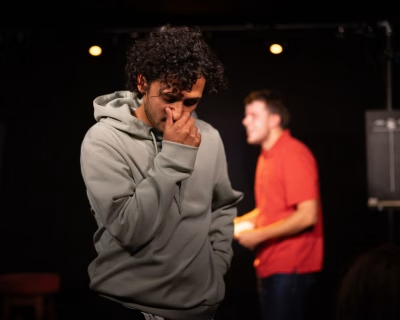
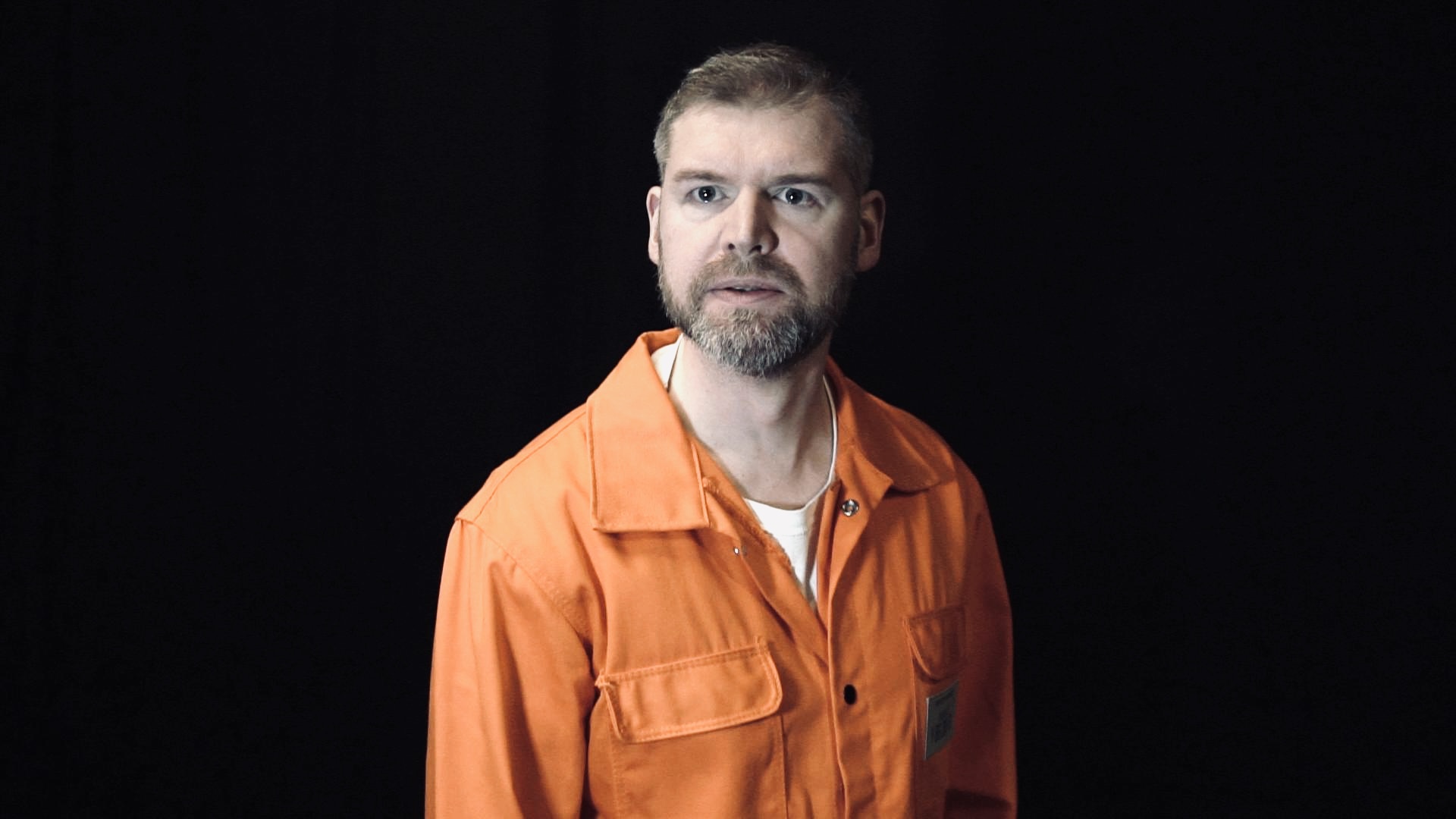
In this interview, I chat to Alex van Ric about his debut play Monster Made.
Can you tell me a little about your show and what audiences can expect?
Monster Made is the story of the racist motivated mass murderer Thomas Duncan and the young, ambitious lawyer Amanda Crowley, who volunteers to take on that case even though she cannot win it, which one could consider professional suicide, but actually, she doesn’t want to win it, and there is no question about guilt. Thomas Duncan is guilty! Period.
What drives Amanda is the need to understand why he has done it, why he had chosen to become a monster. Eventually, she wants to ignite a change in that man who has committed a heinous crime, but of course, there is a lot of resistance coming from Thomas Duncan towards her. So there are these two very different people, each one of them with their distinct point of view and they fight for their truth. Actually, they both fight for some kind of change, but the change they envision is completely different and motivated very differently, and of course, these points of views clash.
In that respect, Monster Made deals with themes of racism, identity and change. It is a character study, a psychological intimate play that poses the uncomfortable question of ‚why‘ onto its characters in it but also onto the audience watching it. Why do we act the way we act? Why have we become who we are? It’s about the question of ‚why‘ that gives meaning to our life and that defines our relationship towards ourselves and towards the world surrounding us.
What drew you to this specific story, and why does it belong at the Edinburgh Fringe?
I am born German, I was born in the GDR, a repressive dictatorship state, and history poses the responsibility onto me to ask why? Why could this happen that human beings do unspeakable things to other human beings? And why can this happen again? And it is happening again and again and again.
The number of racist motivated crimes increases all around the world. What seemed to have been a phenomenon on the fringes has now arrived in the middle of society, in politics, in our parliaments. I find this development very alarming. And if you look at the people, you will see that these kinds of resentment are not limited to people of a certain education, socioeconomic background or country. Au contraire, it’s widespread, and there is a lot of underlying anger in our society. I myself was very angry for a long time in my life with no sense of belonging, and during my acting training in London, my acting teacher, Giles Foreman, said to me I should read the book ‘The Drama of the Gifted Child’ by Alice Miller to figure out why I am so angry. So I did, but it then took me again more than half a decade to return to the works of Alice Miller, and I then read a lot of her books, and once I did, the idea for that play emerged rather quickly.
I envisioned this setting and the characters, and I took it from there with the question in mind of what would happen if the character of Thomas Duncan met a knowing witness? What would change for him? Would it make a difference? And this now also is where the Fringe comes in because the Fringe makes a difference. It is a celebration of diversity, a celebration of marginalised and unheard voices, a celebration of a peaceful coexistence of human beings, no matter where they come from or what they believe in; it actually is everything Thomas Duncan hates, but this need not be the case. A lot of people agree that there is no place for racism in our society, but the share of our world it takes is getting bigger and bigger.
It is a thread eating up the values we’ve been fighting for, the human rights that are true for every human being on this planet and not just for a chosen few and when the resentment made it from the fringes of our society into the parliament than the message and the call for change to find better ways of a peaceful coexistence of all of mankind can make it from the Fringe to the hearts of the people.
What has been the biggest challenge in bringing this production to life?
I think, artistically the biggest challenge to bring it to life was to allow the characters to take the story where they have to take it and to trust that it will be all right even though it’s hard to watch sometimes.
Of course, I had the big questions and concerns in my mind of is it too much? Too harsh? Too ugly? But having done a lot of research, I felt like being dishonest to the gravity of the story if I don’t allow the characters to take it exactly to the point where they are in their life. That might not always be pretty, but racism isn’t pretty at all, and otherwise it would have been an attempt of playing a concept, a nice idea and lip service, but the play is about change, and the starting point for change is to face some kind of uncomfortable truth, and the challenge is to allow that discomfort. Why discomfort? Because if it would be comfortable there wouldn’t be a need for change.
How does the design of your show (set, sound, or lighting) impact the presentation of your story?
The design of the show is very minimalistic which is a huge advantage bringing a show to the Fringe. But that’s also due to the very nature of the place where the story takes place: a single visitors room in a high-security state prison.
A place like this is already by its definition a bare place that’s reduced to the very least necessary, a table and two chairs and in our case, two additional surveillance cameras. In terms of the lighting, I kept it also absolutely simple, and I decided to go for an evenly lit white stage, so there is just one light setting that’s turned on and off with the scenes. The aim in having such simple lighting is to give the actors the most of freedom to follow their impulses to move or not to move at all, because they are not forced to move to a certain part of the stage, where only there will be light.
I think, taken those two together, the simple stage setting in combination with the simple lighting offers the actors and the characters they are portraying the most of freedom for development and furthermore, which is equally important it’s not putting restrictions on the perception of the audience because the same freedom this setting gives to the actors and their characters it also gives that very same freedom to the imagination of the audience to see what they see, whatever that might be what each member of the audience perceives individually. And as a theatre maker, I find it very interesting to support or even to provoke that freedom.
If you could sum up the show in one word or phrase, what would it be and why?
Change. Because that’s what the play is ultimately about, and because change is a very brave thing to do. Change is not easy! In order to change, we have to look at ourselves and we have to admit to ourselves that somehow we’ve been ending somewhere we don’t belong. We have to admit to ourselves that the image of ourselves that we created is flawed, is hurtful to others and to ourselves. And change is scary because we don’t know what will be. We are used to dealing with the world and with people through the image we created for ourselves but changing that image forces us out of our comfort zone. That’s scary and thrilling at the same time.
Monster Made runs at The Annexe at Paradise in The Vault (Venue 29) from August 24th – 30th at 16:20. Tickets can be purchased here: https://www.edfringe.com/tickets/whats-on/monster-made