Did this make my top 50 of 2025? Check out Read About Stuff’s Favourite 50 Shows of 2025.
It is a tale of mixed identities, coy love interests and fiercely flamboyant characterisation as Oscar Wilde’s classic comedy enjoys a stunning revival in London’s West End.
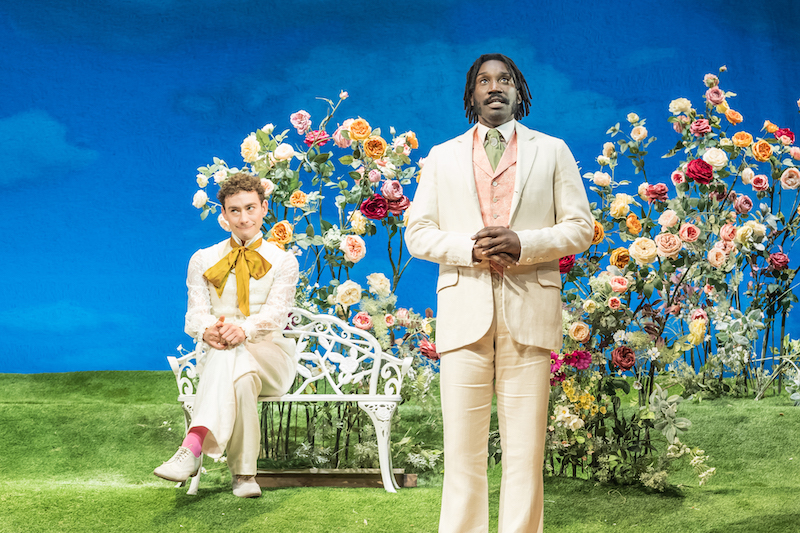
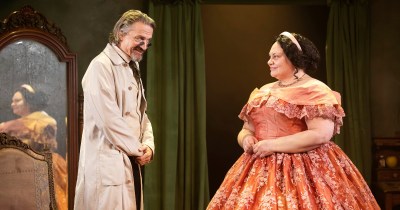
Wilde’s comedy is delightfully simple and playfully sends up the class system of Victorian London, which in this modern revival, directed by Max Webster, reimagines the playwright’s script to reclaim some of Wilde’s more hidden personality traits and bring them to the fore. Wilde’s sexuality, which resulted in his imprisonment in 1895, is threaded well into this piece’s script, from the allusions to a double life, right down to a silver cigarette case which mirrors that which he gave to him by long-time lover Lord Alfred Douglas. While in the 19th century such symbols were mere allusions, a nod to those who understood, Webster’s 2025 production of Wilde’s play is less discreet, openly flamboyant, and full of sparkle, glitz, and an exuberant amount of floral decorations.
It is a simple enough story. Bored and broke, dandy Algernon Moncrieff (Years and Years’ singer Olly Alexander) looks to cause mischief and seize the chance to appear as a made-up brother of friend Jack Worthing (Nathan Stewart-Jarrett), and wreak havoc in the latter’s country estate. What follows is a full and frolicking production, as both Algernon and Jack pretend to be someone they’re not in the hopes of succeeding in deceiving their respective love interests, all layered with the typical sassy wordplay and cutting one-liners synonymous with Wilde’s writing.
Alexander’s Algernon is fiercely mischievous, which Alexander’s portrayal brings to the fore. It is a playful performance, using Alexander’s musical background as the punchline on more than one occasion, and his daringly camp characterisation, certainly more open than when Wilde’s play was first performed, aids the obvious deeper meaning behind the writing of duality and identity. Alexander bounces well off of Stewart-Jarrett, whose exasperated Jack, desperate to hold his own disguise together, is a joy to behold.
The pair assume different identities in part to try and win the hearts of Gwendolen (Kitty Hawthorne) and Cecily (Jessica Whitehurst). Both women here thrive in their roles, combining innuendo-filled dialogue, which Webster’s direction helps to enhance, with a strong use of physical comedy, too. Whitehurst’s Cecily becomes a little hyperbolic as her urges take hold during the second half, but just about remains behind a line and compliments favourably Hawthorne’s eager Gwendolen.
In addition, Stephen Fry dazzles as the viper-tongued Lady Bracknell. Although only appearing in a handful of scenes, Fry’s terrific portrayal of the formidable stereotype of Victorian female pretentiousness is superb, and threatens to steal the show. Indeed, it is not just Fry who excels in the wider cast. Hugh Dennis’ goofy Reverend Chasuble’s will-they-won’t-they with Shobna Gulati’s Miss Prism is a cute sub-plot, with Dennis in particular leaning into his comic background to make the most of Chasuble’s limited stage time. Meanwhile, Hayley Carmichael’s brilliant turn as servants Merriman and Lane, like so much of this production, makes a lot out of very little to maximum humorous effect.
This vibrant, energetic comedy is brought to life not just by its tremendous cast and creative direction, but also through Rae Smith’s gorgeously colourful design. Flowers were a huge part of Wilde’s identity, and Smith leans into this heavily, with the production a visual feast of colour throughout.
While many comedies from this era have fallen short in modern revivals, this new version of Wilde’s hit is sharply dynamic, indulging greatly in quick one-liners, fun slapstick moments in a wonderfully frivolous piece that utterly delights.


 Read About Stuff | London Theatre Reviews & Culture