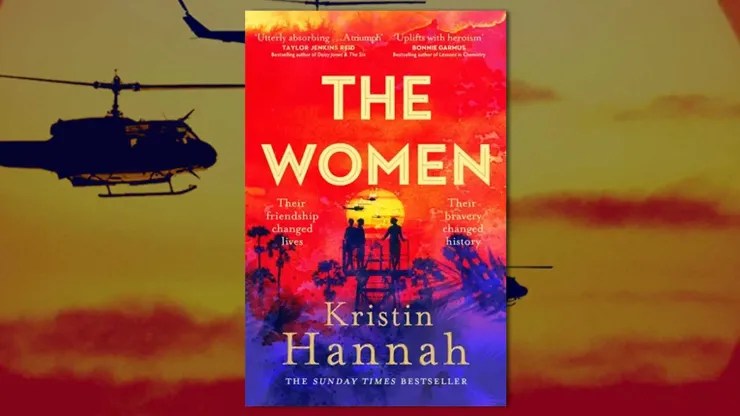
Kristin Hannah’s The Women pulls off something remarkable: it takes one of America’s most mythologised conflicts and tells it through the eyes of those whose voices history largely ignored. At its heart is Frances “Frankie” McGrath, a wealthy California girl whose journey from Coronado Island’s shimmering beaches to the suffocating heat and chaos of Vietnam as part of the US Army Nurse Corps is both harrowing and transformative.
The novel follows Frankie from her naïve beginnings—eager to prove herself beyond the expectations of her privileged upbringing—into the visceral nightmare of war. She is stationed in makeshift hospitals that echo with the screams of the wounded, where death becomes routine and the work is relentless. Alongside fellow nurses Barb and Ethel, Frankie finds sisterhood in the darkest circumstances, their bond becoming a lifeline amid the unbearable. Hannah deftly weaves in Frankie’s romantic entanglements too, raw and sensual against the backdrop of relentless bloodshed. When the war ends, the pain doesn’t: Frankie returns to America only to face ostracism, a society unwilling to acknowledge women’s service, her isolation as scarring as the battles she survived.
One of the novel’s most powerful qualities is its sensitive exploration of mental health. Hannah does not flinch from the distinct psychological damages of war: the panic attacks, the fractured sense of self, the corrosive guilt. Yet she presents these struggles with a lyrical and almost poetic tenderness, using beautifully crafted imagery to capture both the fragility and resilience of those living with PTSD. It is a deeply affecting portrayal that lingers long after the novel closes.
Hannah’s greatest strength lies in her characterisation. Frankie is fully realised, flawed yet resilient, her evolution a testament to courage in impossible conditions. The narrative faces head-on the treatment of nurses in Vietnam, exposing not only the physical horrors of war but the cultural erasure of women’s experiences in its wake. Settings are vividly painted, from Coronado’s golden glow to the mud, monsoon, and violence of Vietnam, drawing readers fully into Frankie’s fractured world.
If there’s a criticism, it lies in the neatness of certain resolutions, which feel slightly too tidy compared to the mess of war. Still, The Women is a raw, moving, and necessary novel, giving voice to the silenced and etching Frankie McGrath into memory as one of Hannah’s most indelible heroines.


 Read About Stuff | London Theatre Reviews & Culture