This review was originally written for The Reviews Hub: https://www.thereviewshub.com/land-of-the-free-southwark-playhouse-borough-london/
2024’s America is currently rapt with election fever, but what runs as a sinister undercurrent is the constant threats of assassination. It is with ironic timing, then, that this new production, Land of the Free, throws us back to the nineteenth-century murder of Abraham Lincoln. What is unique about this show, however, is that it is not yet another romp through Lincoln’s life but rather an insight into his assassin, the infamous John Wilkes Booth.
The production is split into very distinct halves. The first takes a more historical approach, tracking the early life of Wilkes Booth, establishing his early aspirations within an acting family blighted by a bigamist father. It is here where Wilkes Booth’s name is explained – a reference to an English radical, an omen that establishes his fate from the outset. Where the first focuses on the run-up to and then the assassination of Lincoln, attempting to rationalise Wilkes Booth as a murderer scorned by an upset childhood, the second half takes another view, one that focuses upon Wilkes Booth’s frustrations with living in a changing America that does not match his antiquated values. In both parts, one thing remains constant: Wilkes Booth’s desire for fame.
A quirk of this production is how it is written. The first half is far more straightforward, supported by ever-changing placards that countdown to Lincoln’s death, and it carries a foreboding sense of doom for both Lincoln and his assailant. However, it is the second half where the script comes into its own. Wilkes Booth’s childhood focuses on a dismal attempt to stage William Shakespeare’s Julius Caesar, and as Land of the Free continues, it is this Shakespeare play that seems to embody Wilkes Booth. He builds his acting reputation on the back of it, and as he descends further into political, and psychological, madness, the script’s neat touch of having Wilkes Booth slip more into verse is a deft touch. The switch to verse creates more drama but also helps to characterise Wilkes Booth as a dangerous and desperate outlier before his ‘Bonnie and Clyde’ style demise. It is a clever idea to explore Wilkes Booth’s life from multiple angles rather than just blaming a bad upbringing for his violence, and this attempt to explore Wilkes Booth provides a developed insight not usually seen.
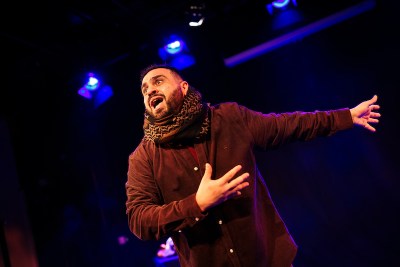
Brandon Bassir’s delivery of Wilkes Booth is energetic, and there is a lot of fun to be had with this character in this script. Bassir captures Booth’s burning desire for fame in his performance, spending much of the play peacocking, eager for the limelight, and there are moments, particularly in the first half’s climax, where Bassir’s effortless delivery allows you to see the growingly unhinged character unveil.
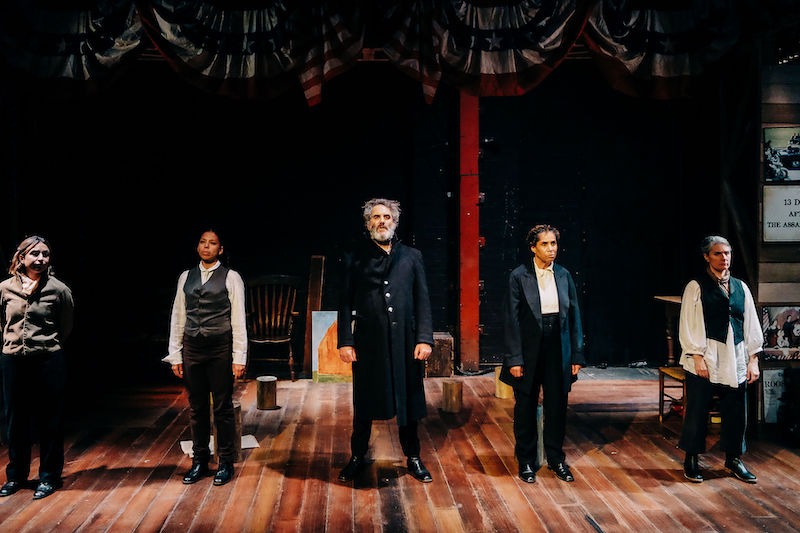
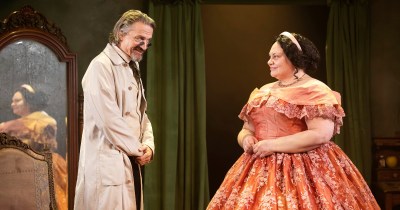
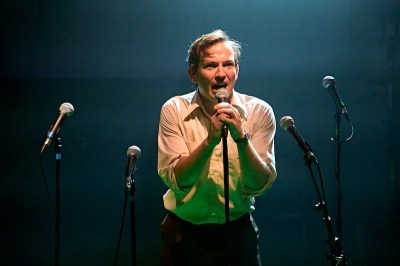
With just seven actors, this small cast works hard to perform over 30 characters ranging from political giants to rural farmers, and the ease with which the group slips into each role is impressive. This is combined with live musical performances, quick comedic timing and dance, which lends well to the vaudeville charm the production has. Clara Onyemere, as Lincoln, captures the President’s gravitas and sense of responsibility well, delivering his speeches with grace and charm in moments that remind you of what America lost with his death.
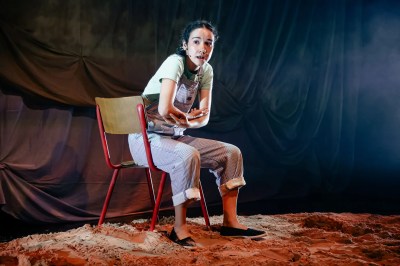
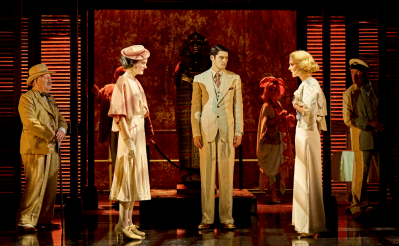
Kate Bunce’s set design is malleable and suits the quick interchanging of scenes and locations this play needs. Garnished with American bunting, this feels like an ‘All-American’ play, ironically depicting scenes of celebration at one of America’s bleakest moments – a nod to America’s resilience, perhaps. The set is also decorated with pictures of assassination attempts, both successful and unsuccessful, which capture the morbid cult of personality that such events evoke, with the image of presidential nominee Donald Trump’s striking fist-raised pose after the attempt on his life looming large, reiterating the eerily apt timing of this production.
There are a few jarring moments that detract from an otherwise seamless production. The last section gives too much weight to Wilkes Booth’s killer, Union soldier Boston Corbett, which does not feel necessary. The play works better when it focuses on Wilkes Booth and those around him, and Corbett’s story just seems a little too forced. Likewise, the caricature of Wilkes Booth works well, but when this spreads to other characters, it detracts from the purposeful oddness that Wilkes Booth needs to have.
Despite it being 20 minutes too long, Land of the Free is a clever piece of theatre, bringing to the stage Wilkes Booth’s complex murderer in a fresh and thought-provoking way. It is a neat idea to put the theatrical limelight firmly on a man who so desperately craved it all his life, yet it does not attempt to rewrite history to rebuild or restore Wilkes Booth’s character provocatively.
As 2024 America continues to grapple with its political volatility, the play’s programme has former President Trump looking at a portrait of Lincoln, a reminder to us that his play is a stark example that the chaos which led to Lincoln’s death is not so dissimilar from the fraught American political climate today.


 Read About Stuff | London Theatre Reviews & Culture